Word Explanation
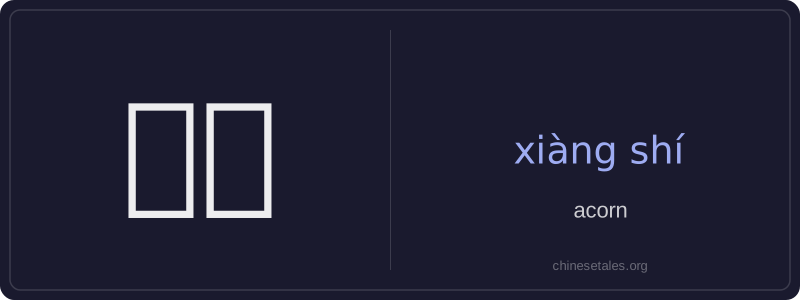
‘橡实’ (xiàng shí) literally means ‘oak fruit’ — 橡 refers to oak trees (especially species like Quercus), and 实 means ‘fruit’ or ‘seed’. In botanical and everyday usage, it specifically denotes the nut-like fruit of oak trees: the acorn. Unlike generic terms for nuts, 橡实 carries a natural, slightly literary or ecological nuance, often appearing in contexts involving forest ecology, wildlife diets, or traditional foraging.
Historically, acorns were gathered and processed (e.g., leached to remove tannins) as food by some communities in China, particularly in mountainous regions. Today, 橡实 appears more frequently in nature writing, environmental education, and discussions about wildlife habitats — for example, noting how squirrels and wild boars rely on them as a seasonal food source. It is not used for commercial or culinary contexts like ‘walnut’ or ‘peanut’; those have separate terms.
Example Sentences
Related Words
国语
‘Guó yǔ’ literally means 'national language'—
面条
‘面条’ (miàn tiáo) literally means ‘flour str
背后
背后 literally means 'back + behind' and functions
认同
‘认同’ (tóng rèn) is a verb meaning ‘to ident
无论谁
‘无论谁’ (wú lùn shéi) is a pronoun meaning
中学
'Zhōngxué' literally combines 'zhōng' (middle)
见面
见面 literally means 'see face' — combining 见 (t
外语
‘外语’ literally means ‘outside language’ —