Word Explanation
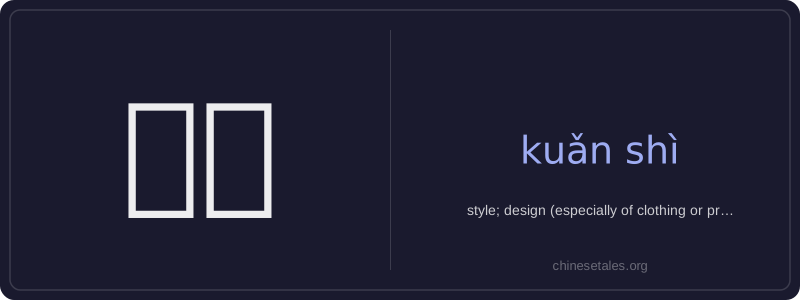
款式 refers to the style, design, or aesthetic form of a physical object—especially clothing, accessories, furniture, or consumer products. The character 款 (kuǎn) originally meant 'item' or 'category', and 式 (shì) means 'form', 'pattern', or 'style'; together, they emphasize the outward, visually distinctive characteristics that define how something looks and fits within a trend or function. It’s commonly used when comparing or selecting items based on appearance rather than material or price.
This word appears frequently in shopping contexts, fashion discussions, product descriptions, and interior design. Unlike terms like 风格 (fēnggé, 'personal style' or 'artistic genre'), 款式 is more concrete and object-focused—it describes the tangible shape, cut, silhouette, or decorative details of a thing. It’s neutral in register and widely used in both spoken and written Chinese, especially in commercial and everyday settings.
Example Sentences
Related Words
国语
‘Guó yǔ’ literally means 'national language'—
面条
‘面条’ (miàn tiáo) literally means ‘flour str
背后
背后 literally means 'back + behind' and functions
认同
‘认同’ (tóng rèn) is a verb meaning ‘to ident
无论谁
‘无论谁’ (wú lùn shéi) is a pronoun meaning
中学
'Zhōngxué' literally combines 'zhōng' (middle)
见面
见面 literally means 'see face' — combining 见 (t
外语
‘外语’ literally means ‘outside language’ —