Word Explanation
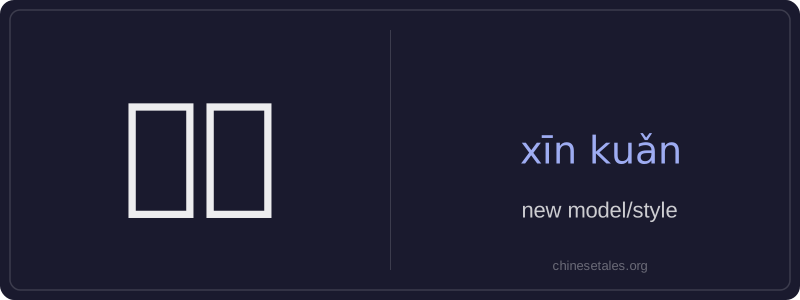
'新款' literally combines '新' (xīn), meaning 'new', and '款' (kuǎn), meaning 'style', 'model', or 'design'. Together, it refers to a newly released version or iteration of a product—especially in fashion, electronics, or automobiles—emphasizing updated appearance, features, or functionality. It’s commonly used in retail, advertising, and casual conversation when highlighting novelty and modernity.
Unlike general terms like '新的' (new), '新款' specifically signals that the item belongs to a fresh production batch or seasonal collection, often implying trendiness or improved specifications. It’s typically used attributively before nouns (e.g., 新款手机) but can stand alone as a noun in context (e.g., '这季的新款很受欢迎'). It carries neutral-to-positive connotations and is widely understood across age groups, though most frequent among consumers and marketers discussing goods.
Example Sentences
Related Words
国语
‘Guó yǔ’ literally means 'national language'—
面条
‘面条’ (miàn tiáo) literally means ‘flour str
背后
背后 literally means 'back + behind' and functions
认同
‘认同’ (tóng rèn) is a verb meaning ‘to ident
无论谁
‘无论谁’ (wú lùn shéi) is a pronoun meaning
中学
'Zhōngxué' literally combines 'zhōng' (middle)
见面
见面 literally means 'see face' — combining 见 (t
外语
‘外语’ literally means ‘outside language’ —