Word Explanation
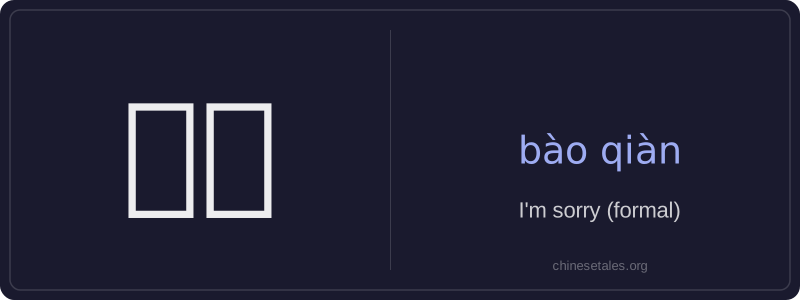
抱歉 (bào qiàn) is a polite, formal expression meaning 'I'm sorry' or 'I apologize'. Literally, 抱 (bào) means 'to hold' or 'to carry', and 歉 (qiàn) means 'regret' or 'apology'; together, they convey the sense of 'carrying regret' — a humble, respectful way to acknowledge fault or inconvenience. It’s commonly used in written communication, customer service, professional settings, or when addressing elders or superiors.
Unlike more casual alternatives like 对不起 (duì bu qǐ), 抱歉 carries a slightly more refined, restrained tone — appropriate for emails, formal speeches, or situations where you want to show sincerity without emotional intensity. It functions as a complete utterance on its own, rarely modified by adverbs, and is almost always placed at the beginning or end of an apology statement.
Example Sentences
Related Words
国语
‘Guó yǔ’ literally means 'national language'—
面条
‘面条’ (miàn tiáo) literally means ‘flour str
背后
背后 literally means 'back + behind' and functions
认同
‘认同’ (tóng rèn) is a verb meaning ‘to ident
无论谁
‘无论谁’ (wú lùn shéi) is a pronoun meaning
中学
'Zhōngxué' literally combines 'zhōng' (middle)
见面
见面 literally means 'see face' — combining 见 (t
外语
‘外语’ literally means ‘outside language’ —