Word Explanation
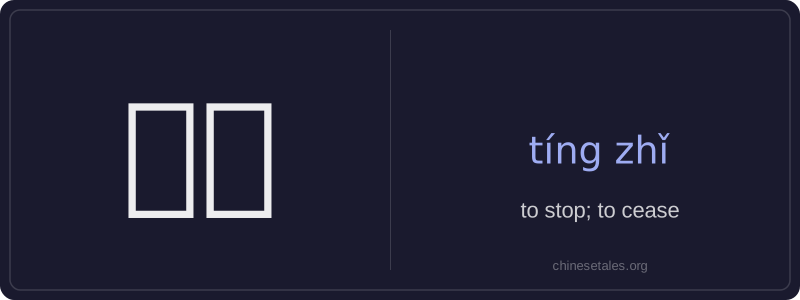
停止 (tíng zhǐ) is a compound verb meaning 'to stop' or 'to cease' — used when an action, process, or state comes to an end. The first character 停 (tíng) means 'to pause' or 'to halt', often implying a temporary standstill; the second character 止 (zhǐ) means 'to stop' or 'to end', carrying a stronger sense of finality or prohibition. Together, they form a formal, neutral-to-advanced verb commonly used in written Chinese, official announcements, instructions, and news reports — less frequent in casual speech than simpler alternatives like 停 (tíng) alone or 别…了 (bié…le).
This word applies to physical actions (e.g., stopping a vehicle), abstract processes (e.g., halting negotiations), or ongoing states (e.g., ceasing production). It’s often followed by a noun (e.g., 停止工作 — 'cease work') or used intransitively with context (e.g., 请立即停止 — 'Please stop immediately'). It can also appear in passive or causative constructions (e.g., 被停止 — 'was stopped').
Example Sentences
Related Words
国语
‘Guó yǔ’ literally means 'national language'—
面条
‘面条’ (miàn tiáo) literally means ‘flour str
背后
背后 literally means 'back + behind' and functions
认同
‘认同’ (tóng rèn) is a verb meaning ‘to ident
无论谁
‘无论谁’ (wú lùn shéi) is a pronoun meaning
中学
'Zhōngxué' literally combines 'zhōng' (middle)
见面
见面 literally means 'see face' — combining 见 (t
外语
‘外语’ literally means ‘outside language’ —