Word Explanation
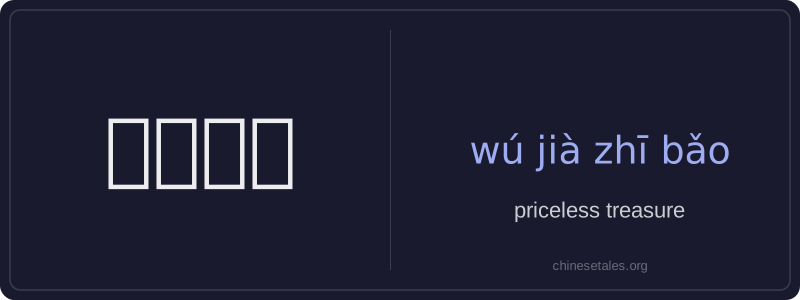
'Wú jià zhī bǎo' literally means 'a treasure without price' — it combines 无 (wú, 'without'), 价 (jià, 'price' or 'value'), 之 (zhī, a classical possessive particle meaning 'of'), and 宝 (bǎo, 'treasure' or 'precious thing'). Together, the phrase conveys something of immeasurable worth — not just expensive, but irreplaceable and deeply meaningful. It’s often used for rare cultural relics, exceptional works of art, or profoundly cherished people or relationships.
This idiom carries a formal, literary tone and appears frequently in written Chinese, historical narratives, and respectful speech. While it can describe physical objects like antiques or endangered species, it’s equally common in metaphorical contexts — for example, praising someone’s integrity, wisdom, or kindness as 'wú jià zhī bǎo'. It reflects a core Chinese value: that true worth transcends monetary measurement.
Example Sentences
Related Words
国语
‘Guó yǔ’ literally means 'national language'—
面条
‘面条’ (miàn tiáo) literally means ‘flour str
背后
背后 literally means 'back + behind' and functions
认同
‘认同’ (tóng rèn) is a verb meaning ‘to ident
无论谁
‘无论谁’ (wú lùn shéi) is a pronoun meaning
中学
'Zhōngxué' literally combines 'zhōng' (middle)
见面
见面 literally means 'see face' — combining 见 (t
外语
‘外语’ literally means ‘outside language’ —