Word Explanation
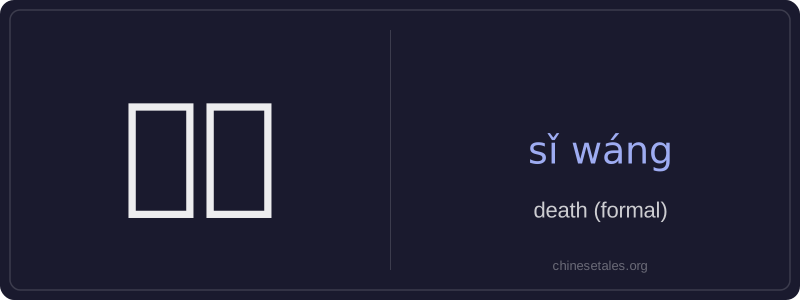
死亡 (sǐ wáng) is a formal, neutral noun meaning 'death'—the permanent cessation of all biological functions that sustain a living organism. It combines 死 (sǐ), meaning 'to die', and 亡 (wáng), meaning 'to perish' or 'to be lost'; together they reinforce the finality and gravity of the event. Unlike colloquial terms like 挂了 (guà le) or 去世 (qùshì), 死亡 is used in official, medical, legal, and academic contexts—such as death certificates, news reports, scientific articles, or public health statistics.
This term avoids emotional connotations and is rarely used in casual conversation or when referring to loved ones directly. It emphasizes factual, objective reality rather than personal loss or mourning. You’ll commonly see it in phrases like 死亡率 (sǐwáng lǜ, 'mortality rate'), 死亡证明 (sǐwáng zhèngmíng, 'death certificate'), or 因…而死亡 (yīn… ér sǐwáng, 'to die from…'). Its formality makes it appropriate for precision but inappropriate for empathetic or informal speech.
Example Sentences
Related Words
国语
‘Guó yǔ’ literally means 'national language'—
面条
‘面条’ (miàn tiáo) literally means ‘flour str
背后
背后 literally means 'back + behind' and functions
认同
‘认同’ (tóng rèn) is a verb meaning ‘to ident
无论谁
‘无论谁’ (wú lùn shéi) is a pronoun meaning
中学
'Zhōngxué' literally combines 'zhōng' (middle)
见面
见面 literally means 'see face' — combining 见 (t
外语
‘外语’ literally means ‘outside language’ —