Word Explanation
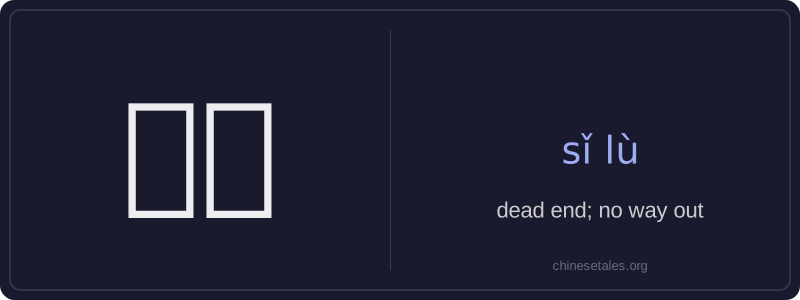
'死路' literally combines 死 (sǐ, 'dead') and 路 (lù, 'road' or 'path'), forming a compound noun meaning 'a road that leads nowhere'—hence its figurative sense of 'dead end' or 'no way out.' It evokes a physical cul-de-sac but is far more commonly used metaphorically to describe hopeless situations: stalled negotiations, unsolvable problems, or career paths with no advancement.
The term carries a strong connotation of finality and futility. It's neutral in register but often appears in serious contexts—news reports, business analysis, or personal reflection—and rarely in lighthearted or casual speech. Unlike the English 'dead end,' 死路 almost never refers to literal street signage; instead, it’s reserved for abstract impasses where all options seem exhausted and reversal is impossible.
Example Sentences
Related Words
国语
‘Guó yǔ’ literally means 'national language'—
面条
‘面条’ (miàn tiáo) literally means ‘flour str
背后
背后 literally means 'back + behind' and functions
认同
‘认同’ (tóng rèn) is a verb meaning ‘to ident
无论谁
‘无论谁’ (wú lùn shéi) is a pronoun meaning
中学
'Zhōngxué' literally combines 'zhōng' (middle)
见面
见面 literally means 'see face' — combining 见 (t
外语
‘外语’ literally means ‘outside language’ —