Word Explanation
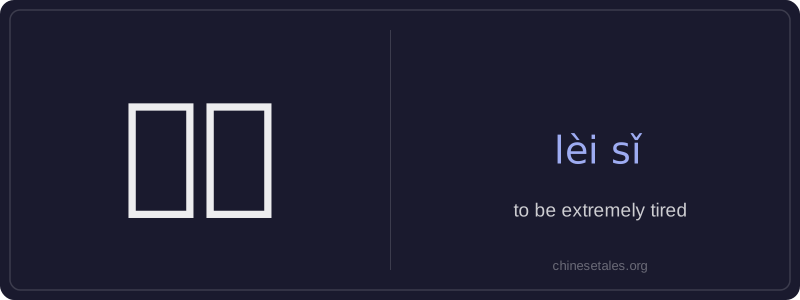
累死 (lèi sǐ) is an expressive, colloquial phrase meaning 'extremely tired'—so exhausted that one feels physically or mentally drained to the point of collapse. Literally, it combines 累 (lèi), meaning 'tired' or 'fatigued', and 死 (sǐ), meaning 'dead'. Though it uses the character for 'death', it's not literal—it’s a common exaggeration in Chinese, similar to English expressions like 'I'm dead tired' or 'I'm wiped out'. The structure follows the pattern [adjective] + 死, which intensifies the degree of the state.
This phrase is frequently used in informal spoken Chinese to convey strong physical or mental exhaustion after long work hours, intense study, travel, or caregiving. It often appears in first-person statements ('我累死了') or empathetic responses ('你肯定累死了!'). While vivid and widely understood, it’s generally avoided in formal writing or professional settings due to its hyperbolic, conversational tone.
Example Sentences
Related Words
国语
‘Guó yǔ’ literally means 'national language'—
面条
‘面条’ (miàn tiáo) literally means ‘flour str
背后
背后 literally means 'back + behind' and functions
认同
‘认同’ (tóng rèn) is a verb meaning ‘to ident
无论谁
‘无论谁’ (wú lùn shéi) is a pronoun meaning
中学
'Zhōngxué' literally combines 'zhōng' (middle)
见面
见面 literally means 'see face' — combining 见 (t
外语
‘外语’ literally means ‘outside language’ —