Word Explanation
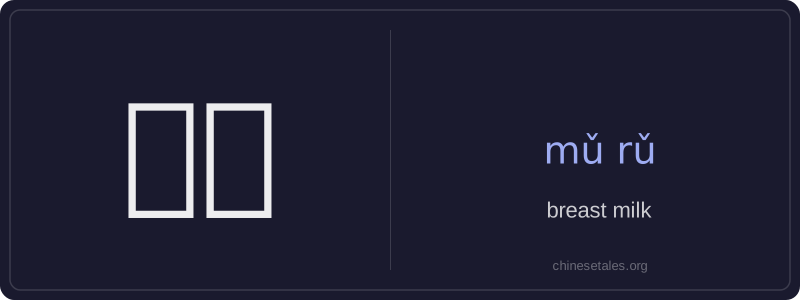
母乳 literally combines 母 (mǔ), meaning 'mother', and 乳 (rǔ), meaning 'milk' or 'breast'. Together, they form the precise term for milk produced by a human mother’s mammary glands — breast milk. It is a biologically rich fluid containing antibodies, nutrients, and enzymes essential for infant development and immunity.
This word is used almost exclusively in medical, parenting, and public health contexts — for example, in discussions about breastfeeding benefits, lactation support, or infant nutrition guidelines. Unlike general terms like 牛奶 (cow’s milk) or 奶 (milk, generic), 母乳 carries strong connotations of natural nourishment, maternal care, and early-life health. It is not used metaphorically or for animal milk; for that, terms like 羊乳 (goat milk) or 牛乳 (cow milk) are employed.
Example Sentences
Related Words
国语
‘Guó yǔ’ literally means 'national language'—
面条
‘面条’ (miàn tiáo) literally means ‘flour str
背后
背后 literally means 'back + behind' and functions
认同
‘认同’ (tóng rèn) is a verb meaning ‘to ident
无论谁
‘无论谁’ (wú lùn shéi) is a pronoun meaning
中学
'Zhōngxué' literally combines 'zhōng' (middle)
见面
见面 literally means 'see face' — combining 见 (t
外语
‘外语’ literally means ‘outside language’ —