Word Explanation
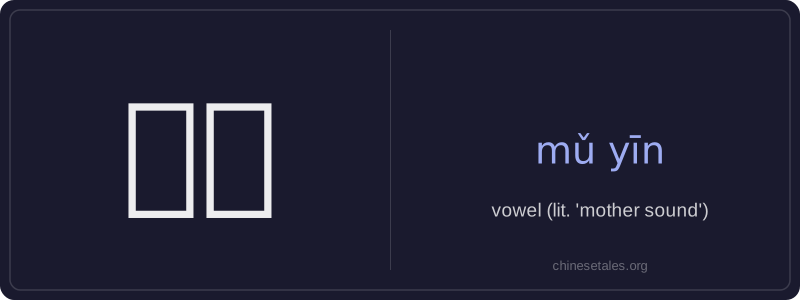
"母音" (mǔ yīn) literally means "mother sound"—a poetic, classical way to refer to vowels in Chinese phonetics. The character 母 (mǔ) signifies 'mother' or 'source', suggesting vowels are foundational, resonant sounds that carry and shape speech; 音 (yīn) means 'sound' or 'tone'. Though technically accurate, this term is largely archaic or academic—used mainly in linguistics textbooks, historical phonology discussions, or formal phonetic analysis—not in everyday conversation.
In modern spoken Mandarin, people almost always say "元音" (yuán yīn), the standard, widely accepted term for 'vowel'. "母音" may appear in older linguistic works, Japanese-influenced terminology (since Japanese uses 母音 similarly), or in contexts emphasizing traditional Chinese phonetic theory. Learners should recognize it when reading scholarly material but default to "元音" in active use.
Example Sentences
Related Words
国语
‘Guó yǔ’ literally means 'national language'—
面条
‘面条’ (miàn tiáo) literally means ‘flour str
背后
背后 literally means 'back + behind' and functions
认同
‘认同’ (tóng rèn) is a verb meaning ‘to ident
无论谁
‘无论谁’ (wú lùn shéi) is a pronoun meaning
中学
'Zhōngxué' literally combines 'zhōng' (middle)
见面
见面 literally means 'see face' — combining 见 (t
外语
‘外语’ literally means ‘outside language’ —