Word Explanation
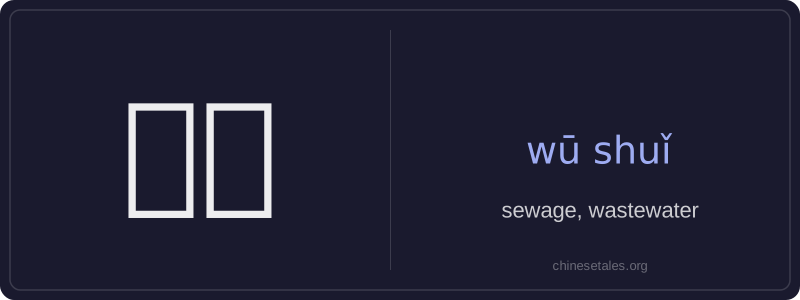
‘污水’ literally combines ‘污’ (wū), meaning ‘dirty’, ‘filthy’, or ‘polluted’, and ‘水’ (shuǐ), meaning ‘water’. Together, they form a compound noun meaning ‘sewage’ or ‘wastewater’ — water that has been contaminated by human use, industrial processes, or natural decay. It is commonly used in environmental, public health, and infrastructure contexts, such as wastewater treatment, pollution control, and urban planning.
The term carries a neutral-to-negative connotation and is rarely used in casual daily conversation unless discussing sanitation, ecology, or city management. It is not interchangeable with general terms for ‘dirty water’ like 脏水 (zāng shuǐ), which refers more broadly to visibly unclean water (e.g., muddy rainwater or used dishwater) but lacks the technical and systemic implications of 污水. In formal writing and official reports, 污水 consistently denotes water requiring treatment before reuse or safe discharge.
Example Sentences
Related Words
国语
‘Guó yǔ’ literally means 'national language'—
面条
‘面条’ (miàn tiáo) literally means ‘flour str
背后
背后 literally means 'back + behind' and functions
外语
‘外语’ literally means ‘outside language’ —
认同
‘认同’ (tóng rèn) is a verb meaning ‘to ident
无论谁
‘无论谁’ (wú lùn shéi) is a pronoun meaning
中学
'Zhōngxué' literally combines 'zhōng' (middle)
见面
见面 literally means 'see face' — combining 见 (t