Word Explanation
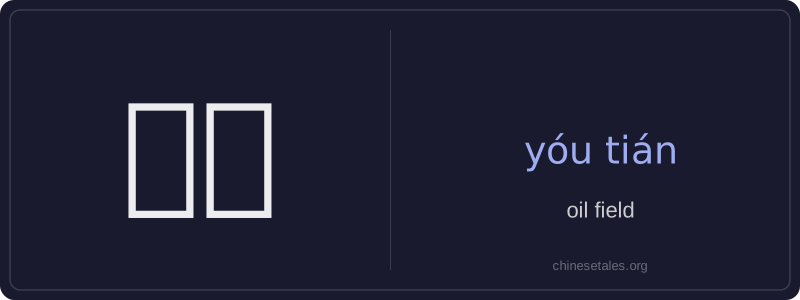
油田 (yóu tián) literally means 'oil field' — a geographical area where petroleum is extracted from underground reservoirs. The character 油 (yóu) means 'oil' or 'grease', and 田 (tián) means 'field' or 'farmland'; together, they form a compound noun referring to land containing commercially viable oil deposits. Unlike its literal components, 油田 does not imply agricultural use — it’s strictly a geological and industrial term.
This word is commonly used in news reports, energy policy discussions, geography textbooks, and economic analyses. It appears in both formal and technical contexts, often paired with verbs like 开发 (kāifā, 'to develop'), 勘探 (kàntàn, 'to explore'), or 位于 (wèiyú, 'to be located in'). While the characters individually are common, the compound 油田 is highly specialized and rarely appears in casual conversation unless discussing energy or regional development.
Example Sentences
Related Words
国语
‘Guó yǔ’ literally means 'national language'—
面条
‘面条’ (miàn tiáo) literally means ‘flour str
背后
背后 literally means 'back + behind' and functions
外语
‘外语’ literally means ‘outside language’ —
认同
‘认同’ (tóng rèn) is a verb meaning ‘to ident
无论谁
‘无论谁’ (wú lùn shéi) is a pronoun meaning
中学
'Zhōngxué' literally combines 'zhōng' (middle)
见面
见面 literally means 'see face' — combining 见 (t