Word Explanation
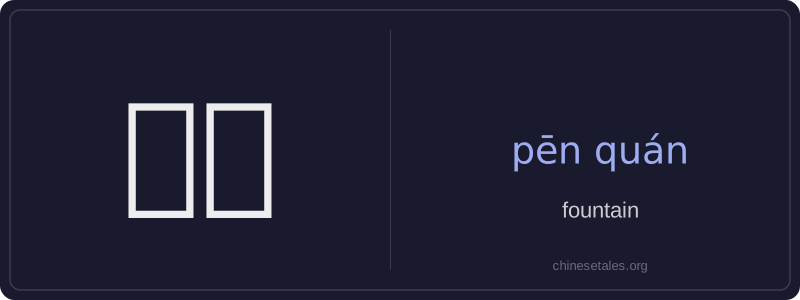
'喷泉' (pēn quán) literally combines 喷 (pēn), meaning 'to spurt' or 'to spray', and 泉 (quán), meaning 'spring' or 'natural fountain'. Together, they refer to a decorative water feature where water is forced upward through nozzles—often found in city squares, parks, or gardens. Unlike natural springs (also called 泉), a 喷泉 is typically man-made and designed for aesthetic or recreational purposes.
This word is neutral in register and commonly used in both spoken and written Chinese. It appears frequently in travel descriptions, urban planning contexts, and children’s books about public spaces. While 泉 alone can mean 'spring' or 'fountain' in classical or poetic usage, 喷泉 specifically emphasizes the active, pressurized flow of water—highlighting movement and engineering rather than natural origin.
Example Sentences
Related Words
国语
‘Guó yǔ’ literally means 'national language'—
面条
‘面条’ (miàn tiáo) literally means ‘flour str
背后
背后 literally means 'back + behind' and functions
外语
‘外语’ literally means ‘outside language’ —
认同
‘认同’ (tóng rèn) is a verb meaning ‘to ident
无论谁
‘无论谁’ (wú lùn shéi) is a pronoun meaning
中学
'Zhōngxué' literally combines 'zhōng' (middle)
见面
见面 literally means 'see face' — combining 见 (t