Word Explanation
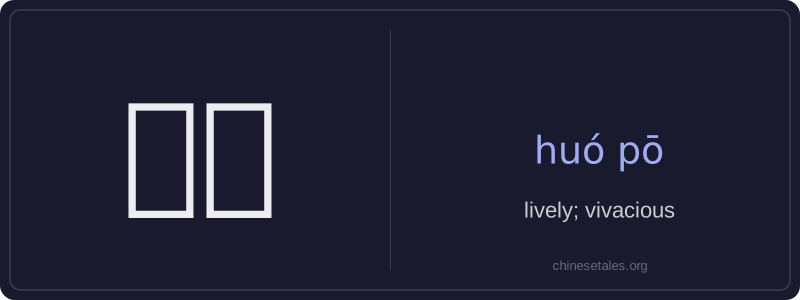
活泼 (huó pō) is an adjective meaning 'lively' or 'vivacious' — describing someone or something full of energy, enthusiasm, and cheerful spontaneity. The first character 活 means 'alive' or 'living', suggesting vitality and responsiveness; the second character 泼 originally means 'to splash' but here evokes dynamism and unrestrained expression. Together, they form a vivid compound that emphasizes energetic, engaging, and socially warm behavior — especially common when describing children, pets, or artistic performances.
While often used for people (especially young ones), 活泼 also applies to animals, styles (e.g., a lively dance style), or even tones of voice and writing. It carries a positive, affectionate connotation — never negative or critical. Unlike some adjectives in Chinese, 活泼 is rarely used predicatively without a degree word like 很 or 特别; it typically appears after a subject with 是 or as a descriptive modifier before a noun (e.g., 活泼的孩子).
Example Sentences
Related Words
国语
‘Guó yǔ’ literally means 'national language'—
面条
‘面条’ (miàn tiáo) literally means ‘flour str
背后
背后 literally means 'back + behind' and functions
外语
‘外语’ literally means ‘outside language’ —
认同
‘认同’ (tóng rèn) is a verb meaning ‘to ident
无论谁
‘无论谁’ (wú lùn shéi) is a pronoun meaning
中学
'Zhōngxué' literally combines 'zhōng' (middle)
见面
见面 literally means 'see face' — combining 见 (t