Word Explanation
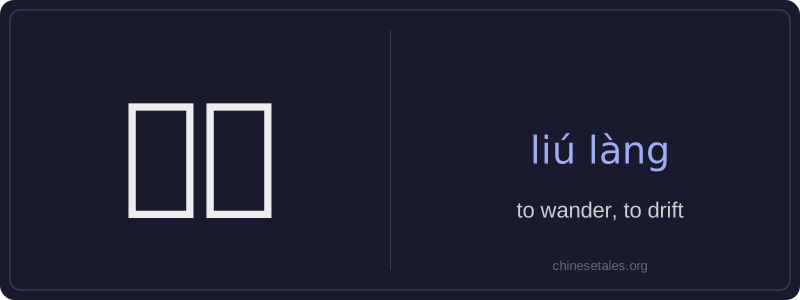
‘流浪’ (liú làng) is a verb meaning ‘to wander aimlessly’ or ‘to drift without a fixed home or purpose.’ The first character, 流 (liú), conveys movement, flow, or dispersal—like water flowing freely. The second character, 浪 (làng), originally means ‘wave,’ evoking instability, restlessness, and lack of direction. Together, they form an evocative compound suggesting a life unmoored—physically or emotionally—without steady shelter, routine, or belonging.
This word is commonly used to describe people (especially the homeless or displaced) and animals (especially stray dogs and cats) that move from place to place without a permanent residence. It carries a gentle but poignant tone—not harsh like ‘begging’ or ‘roaming,’ but imbued with quiet sadness or vulnerability. While it can occasionally describe abstract drifting (e.g., thoughts or time), its most frequent and natural usage relates to living beings without stable homes.
Example Sentences
Related Words
国语
‘Guó yǔ’ literally means 'national language'—
面条
‘面条’ (miàn tiáo) literally means ‘flour str
无论谁
‘无论谁’ (wú lùn shéi) is a pronoun meaning
背后
背后 literally means 'back + behind' and functions
外语
‘外语’ literally means ‘outside language’ —
认同
‘认同’ (tóng rèn) is a verb meaning ‘to ident
中学
'Zhōngxué' literally combines 'zhōng' (middle)
见面
见面 literally means 'see face' — combining 见 (t