Word Explanation
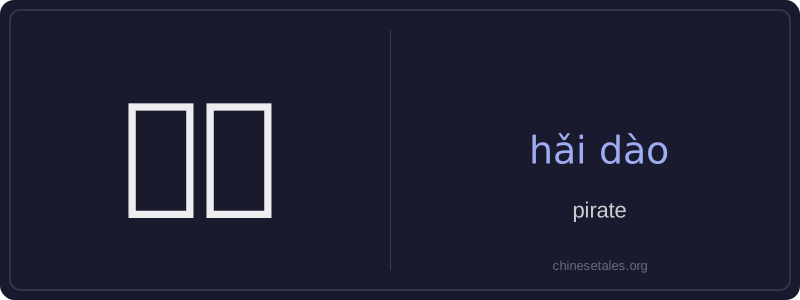
海盗 (hǎi dào) literally means 'sea thief'—'海' (hǎi) means 'sea' or 'ocean', and '盗' (dào) means 'thief' or 'to steal'. Together, they refer to people who attack and rob ships at sea, often operating outside the law. Historically, pirates were active in regions like the South China Sea, the Caribbean, and the Indian Ocean; today, the term is also used metaphorically for digital copyright violators (e.g., software or media pirates).
In modern Chinese, 海盗 is commonly used in both historical narratives and contemporary contexts—such as news reports about maritime security or discussions about intellectual property. It carries a strongly negative connotation, implying lawlessness, violence, and greed. Unlike English, Chinese doesn’t distinguish grammatically between singular and plural forms: 海盗 can mean 'a pirate' or 'pirates' depending on context and modifiers (e.g., 一个海盗 vs. 许多海盗).
Example Sentences
Related Words
国语
‘Guó yǔ’ literally means 'national language'—
面条
‘面条’ (miàn tiáo) literally means ‘flour str
无论谁
‘无论谁’ (wú lùn shéi) is a pronoun meaning
背后
背后 literally means 'back + behind' and functions
外语
‘外语’ literally means ‘outside language’ —
认同
‘认同’ (tóng rèn) is a verb meaning ‘to ident
中学
'Zhōngxué' literally combines 'zhōng' (middle)
见面
见面 literally means 'see face' — combining 见 (t