Word Explanation
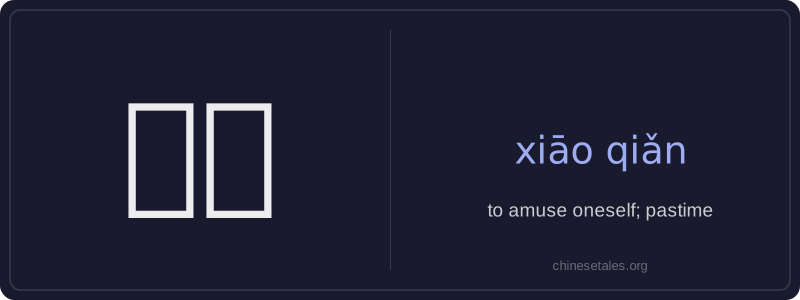
‘消遣’ literally combines ‘消’ (to eliminate, dispel) and ‘遣’ (to send away, dispatch), together conveying the idea of dispelling time or idle moments—hence, engaging in light, enjoyable activities to relax or pass the time. It functions both as a noun (meaning ‘pastime’ or ‘amusement’) and as a verb (meaning ‘to amuse oneself’ or ‘to while away time’). It often implies leisurely, low-stakes activities—not work or study, but things like reading a novel, playing chess, watching a comedy, or walking in the park.
This word carries a neutral-to-positive connotation and is commonly used in both spoken and written Chinese. It’s more refined than casual terms like ‘玩儿’ (to play) and less formal than ‘娱乐’ (entertainment). You’ll hear it in contexts ranging from personal routines (e.g., weekend hobbies) to cultural commentary (e.g., how people spend free time in modern society). While it can describe solitary or social activities, it always centers on voluntary, pleasurable engagement—not obligation or duty.
Example Sentences
Related Words
国语
‘Guó yǔ’ literally means 'national language'—
面条
‘面条’ (miàn tiáo) literally means ‘flour str
无论谁
‘无论谁’ (wú lùn shéi) is a pronoun meaning
背后
背后 literally means 'back + behind' and functions
外语
‘外语’ literally means ‘outside language’ —
认同
‘认同’ (tóng rèn) is a verb meaning ‘to ident
中学
'Zhōngxué' literally combines 'zhōng' (middle)
见面
见面 literally means 'see face' — combining 见 (t