Word Explanation
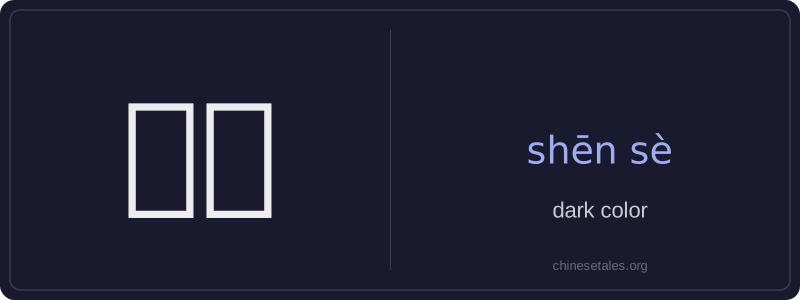
深色 (shēn sè) literally combines 深 (shēn), meaning 'deep' or 'intense', and 色 (sè), meaning 'color'. Together, it refers to any color with low lightness—such as navy blue, charcoal gray, forest green, or burgundy—and is used both as a noun ('a dark color') and an adjective ('dark-colored'). It contrasts directly with 浅色 (qiǎn sè, 'light color').
This term appears frequently in everyday contexts like clothing descriptions, interior design, food presentation (e.g., dark-fleshed fish), and animal coat patterns—especially when distinguishing between light- and dark-coated breeds (e.g., deep-colored pandas or Siamese cats). Unlike the more technical term 暗色 (àn sè, 'dull/dim color'), 深色 emphasizes saturation and depth rather than lack of brightness, making it neutral and widely appropriate in both spoken and written Chinese.
Example Sentences
Related Words
国语
‘Guó yǔ’ literally means 'national language'—
面条
‘面条’ (miàn tiáo) literally means ‘flour str
无论谁
‘无论谁’ (wú lùn shéi) is a pronoun meaning
背后
背后 literally means 'back + behind' and functions
外语
‘外语’ literally means ‘outside language’ —
认同
‘认同’ (tóng rèn) is a verb meaning ‘to ident
中学
'Zhōngxué' literally combines 'zhōng' (middle)
见面
见面 literally means 'see face' — combining 见 (t