Word Explanation
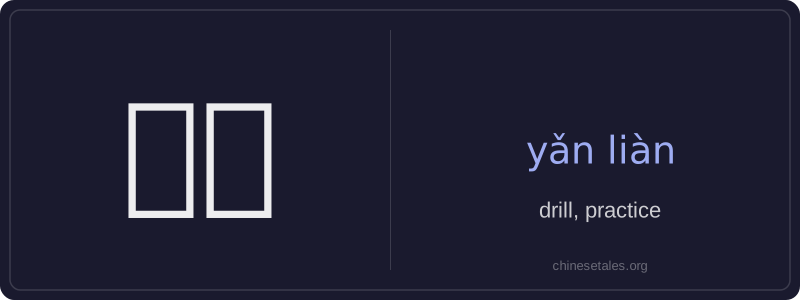
演练 (yǎn liàn) literally combines 演 (yǎn), meaning 'to perform' or 'to demonstrate', and 练 (liàn), meaning 'to practice' or 'to train'. Together, it refers to a structured, often simulated, rehearsal of procedures—especially for emergency response, safety protocols, or technical operations. It emphasizes practical application rather than theoretical study, and is commonly used in contexts like fire drills, earthquake preparedness, medical emergency training, or military exercises.
Unlike general terms like 练习 (liànxí, 'practice') or 训练 (xùnliàn, 'training'), 演练 carries the nuance of a full-scale, scenario-based simulation where participants act out roles under realistic conditions. It’s frequently paired with nouns indicating the type of event (e.g., 消防演练 'fire drill', 地震演练 'earthquake drill') and often appears in official announcements, safety guidelines, and institutional training plans.
Example Sentences
Related Words
国语
‘Guó yǔ’ literally means 'national language'—
面条
‘面条’ (miàn tiáo) literally means ‘flour str
无论谁
‘无论谁’ (wú lùn shéi) is a pronoun meaning
背后
背后 literally means 'back + behind' and functions
外语
‘外语’ literally means ‘outside language’ —
认同
‘认同’ (tóng rèn) is a verb meaning ‘to ident
中学
'Zhōngxué' literally combines 'zhōng' (middle)
见面
见面 literally means 'see face' — combining 见 (t