Word Explanation
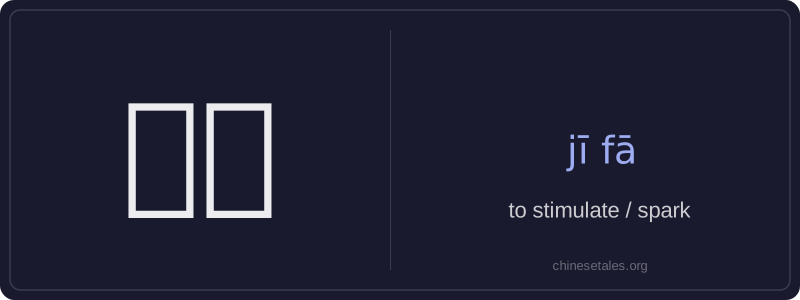
激发 means 'to stimulate' or 'to spark'—often referring to awakening a feeling, reaction, ability, or response that already exists but is dormant or inactive. The first character 激 (jī) conveys intensity, agitation, or excitement (as in 激动 jīdòng, 'to be excited'), while 发 (fā) means 'to emit', 'to send out', or 'to initiate' (as in 发展 fāzhǎn, 'to develop'). Together, they suggest triggering something internal into active expression—like igniting motivation, curiosity, creativity, or even an immune response.
This verb is commonly used in educational, psychological, and professional contexts—for example, teachers aim to 激发 students’ interest, leaders seek to 激发 team potential, and scientists study how stimuli 激发 neural activity. It’s transitive and usually followed by a noun object (e.g., 激发兴趣, 激发潜能). It carries a positive, constructive connotation and rarely appears in casual speech—it’s more formal than everyday alternatives like 引起 (yǐnqǐ, 'to cause') or 唤起 (huànqǐ, 'to evoke').
Example Sentences
Related Words
国语
‘Guó yǔ’ literally means 'national language'—
面条
‘面条’ (miàn tiáo) literally means ‘flour str
无论谁
‘无论谁’ (wú lùn shéi) is a pronoun meaning
背后
背后 literally means 'back + behind' and functions
外语
‘外语’ literally means ‘outside language’ —
认同
‘认同’ (tóng rèn) is a verb meaning ‘to ident
中学
'Zhōngxué' literally combines 'zhōng' (middle)
见面
见面 literally means 'see face' — combining 见 (t