Word Explanation
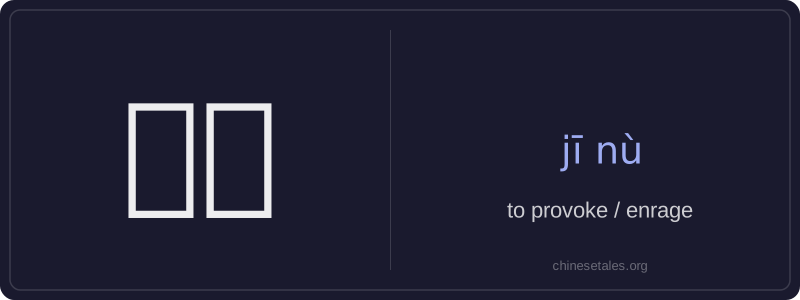
激怒 is a transitive verb meaning 'to provoke' or 'to enrage' — it describes the act of causing someone to become extremely angry, often suddenly or intensely. The first character 激 (jī) means 'to stimulate', 'to excite', or 'to stir up', while 怒 (nù) means 'anger' or 'rage'. Together, they form a compound that emphasizes the causal relationship: one person or action triggers another’s strong anger. It’s commonly used in both spoken and written Chinese, especially when describing deliberate or careless behavior that leads to an emotional outburst.
This word carries a slightly formal or literary tone and appears frequently in narratives, news reports, and psychological or interpersonal contexts. Unlike more neutral terms like 生气 (shēngqì, 'to get angry'), 激怒 focuses on the external cause rather than the internal feeling. It implies responsibility — the subject performing 激怒 is typically held accountable for inciting the anger of the object.
Example Sentences
Related Words
国语
‘Guó yǔ’ literally means 'national language'—
面条
‘面条’ (miàn tiáo) literally means ‘flour str
无论谁
‘无论谁’ (wú lùn shéi) is a pronoun meaning
背后
背后 literally means 'back + behind' and functions
外语
‘外语’ literally means ‘outside language’ —
认同
‘认同’ (tóng rèn) is a verb meaning ‘to ident
中学
'Zhōngxué' literally combines 'zhōng' (middle)
见面
见面 literally means 'see face' — combining 见 (t