Word Explanation
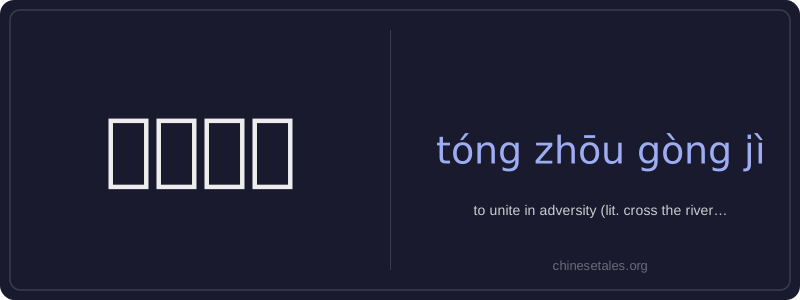
‘Tóng zhōu gòng jì’ is a classical Chinese idiom meaning ‘to unite in adversity’ or ‘to pull together through hardship.’ Literally, it reads as ‘same boat, jointly cross (the river),’ evoking the image of people sharing one small boat on a turbulent river—forcing cooperation, mutual support, and shared responsibility to survive. Each character contributes: 同 (same), 舟 (boat), 共 (together), 济 (to cross or rescue). The idiom emphasizes solidarity not just in convenience but especially when danger or difficulty looms.
This phrase is widely used in formal speeches, news reports, and written commentary to describe collective resilience—such as during natural disasters, economic crises, or public health emergencies. It carries a dignified, somewhat literary tone and is rarely used in casual daily conversation. While it conveys unity, it specifically implies unity *under pressure*, distinguishing it from general terms for teamwork or friendship.
Example Sentences
Related Words
国语
‘Guó yǔ’ literally means 'national language'—
面条
‘面条’ (miàn tiáo) literally means ‘flour str
无论谁
‘无论谁’ (wú lùn shéi) is a pronoun meaning
背后
背后 literally means 'back + behind' and functions
外语
‘外语’ literally means ‘outside language’ —
认同
‘认同’ (tóng rèn) is a verb meaning ‘to ident
中学
'Zhōngxué' literally combines 'zhōng' (middle)
见面
见面 literally means 'see face' — combining 见 (t