Word Explanation
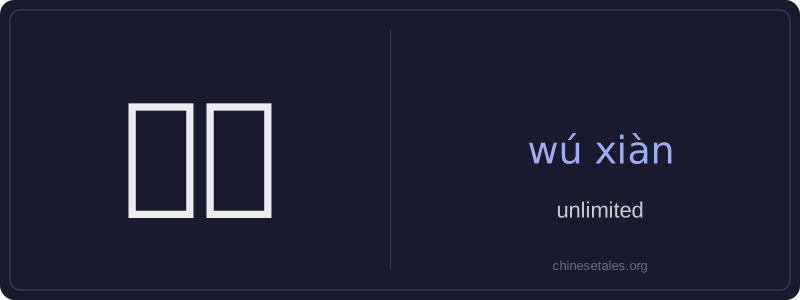
无限 (wú xiàn) literally means 'without limit' — 无 (wú) means 'not' or 'without', and 限 (xiàn) means 'limit' or 'boundary'. Together, they form an adjective meaning 'unlimited', 'boundless', or 'infinite'. It describes something with no restriction in quantity, duration, scope, or degree.
This word is commonly used in both formal and informal contexts — from scientific or philosophical discussions (e.g., infinite space) to everyday expressions (e.g., unlimited data plans or endless patience). While it can modify nouns directly (e.g., 无限可能), it’s often used predicatively after 是 or 很. It carries a neutral-to-positive connotation, emphasizing abundance or openness rather than scarcity or constraint.
Example Sentences
Related Words
国语
‘Guó yǔ’ literally means 'national language'—
面条
‘面条’ (miàn tiáo) literally means ‘flour str
无论谁
‘无论谁’ (wú lùn shéi) is a pronoun meaning
背后
背后 literally means 'back + behind' and functions
外语
‘外语’ literally means ‘outside language’ —
认同
‘认同’ (tóng rèn) is a verb meaning ‘to ident
中学
'Zhōngxué' literally combines 'zhōng' (middle)
见面
见面 literally means 'see face' — combining 见 (t