Word Explanation
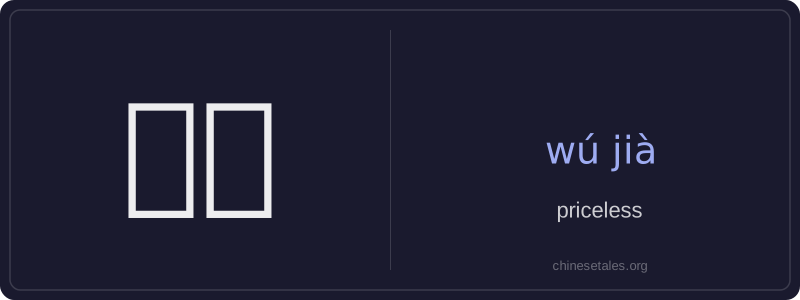
‘无价’ literally means 'without price' — 无 (wú) means 'without' or 'non-', and 价 (jià) means 'price' or 'value'. Together, they form an adjective meaning 'priceless' or 'invaluable', emphasizing something so precious that no monetary amount could reflect its true worth. It’s often used to describe intangible yet deeply cherished things: love, memories, time with family, cultural heritage, or rare natural wonders.
This word carries strong positive connotations and is commonly found in formal, literary, or heartfelt contexts — such as speeches, essays, advertisements for luxury or heritage products, or expressions of gratitude. While it may appear in noun-like structures (e.g., 无价之宝), 无价 itself functions adjectivally and typically modifies nouns directly or appears after 是 (shì) in predicative use. It is not used for literal pricing situations — you wouldn’t say 无价 for a free item; instead, use 免费 (miǎn fèi).
Example Sentences
Related Words
国语
‘Guó yǔ’ literally means 'national language'—
面条
‘面条’ (miàn tiáo) literally means ‘flour str
无论谁
‘无论谁’ (wú lùn shéi) is a pronoun meaning
背后
背后 literally means 'back + behind' and functions
外语
‘外语’ literally means ‘outside language’ —
认同
‘认同’ (tóng rèn) is a verb meaning ‘to ident
中学
'Zhōngxué' literally combines 'zhōng' (middle)
见面
见面 literally means 'see face' — combining 见 (t