Word Explanation
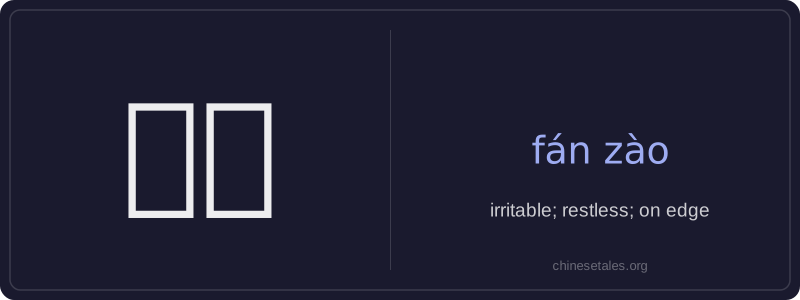
烦躁 (fán zào) is an adjective describing a state of inner restlessness and irritability — when someone feels easily annoyed, impatient, or mentally unsettled, often due to stress, fatigue, heat, or prolonged waiting. The first character 烦 means 'troubled' or 'bothered', carrying connotations of mental discomfort; the second character 躁 means 'agitated' or 'jittery', suggesting physical or emotional unease. Together, they form a compound that emphasizes both psychological irritation and bodily restlessness — more intense than just 'annoyed' but less clinical than 'anxious'.
This word is commonly used in everyday speech and writing to describe temporary emotional states, especially in response to external pressures like traffic jams, noisy environments, or work deadlines. It’s neutral in register — appropriate in conversation, informal writing, and even some formal contexts — but not typically used for chronic conditions (for which terms like 焦虑 or 抑郁 are more precise). It frequently appears in descriptive clauses or after 是…的 structures, and often co-occurs with verbs like 感觉, 觉得, or 变得.
Example Sentences
Related Words
国语
‘Guó yǔ’ literally means 'national language'—
面条
‘面条’ (miàn tiáo) literally means ‘flour str
无论谁
‘无论谁’ (wú lùn shéi) is a pronoun meaning
背后
背后 literally means 'back + behind' and functions
外语
‘外语’ literally means ‘outside language’ —
认同
‘认同’ (tóng rèn) is a verb meaning ‘to ident
中学
'Zhōngxué' literally combines 'zhōng' (middle)
见面
见面 literally means 'see face' — combining 见 (t