Word Explanation
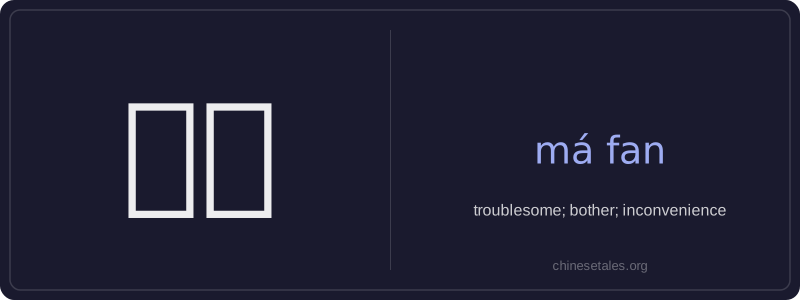
‘麻烦’ (má fan) literally combines ‘麻’ (numbness, tingling) and ‘烦’ (irritation, annoyance), evoking a sense of mental or practical discomfort — like something that makes you feel mentally ‘numb’ with frustration or burdened by extra effort. As a noun, it means ‘bother’, ‘inconvenience’, or ‘trouble’; as an adjective, it means ‘troublesome’ or ‘complicated’. It’s extremely common in daily conversation when asking for favors, apologizing for disruptions, or describing tedious tasks.
The word carries a soft, polite tone — rarely harsh — and is often used to downplay one’s own request or express mild regret. You’ll hear it frequently in service interactions (e.g., ordering food, asking directions) and in personal requests among friends or colleagues. Unlike stronger words like ‘困难’ (nánqìng, ‘difficulty’) or ‘问题’ (wèntí, ‘problem’), ‘麻烦’ emphasizes interpersonal inconvenience rather than objective difficulty.
Example Sentences
Related Words
国语
‘Guó yǔ’ literally means 'national language'—
面条
‘面条’ (miàn tiáo) literally means ‘flour str
无论谁
‘无论谁’ (wú lùn shéi) is a pronoun meaning
背后
背后 literally means 'back + behind' and functions
外语
‘外语’ literally means ‘outside language’ —
认同
‘认同’ (tóng rèn) is a verb meaning ‘to ident
中学
'Zhōngxué' literally combines 'zhōng' (middle)
见面
见面 literally means 'see face' — combining 见 (t