Word Explanation
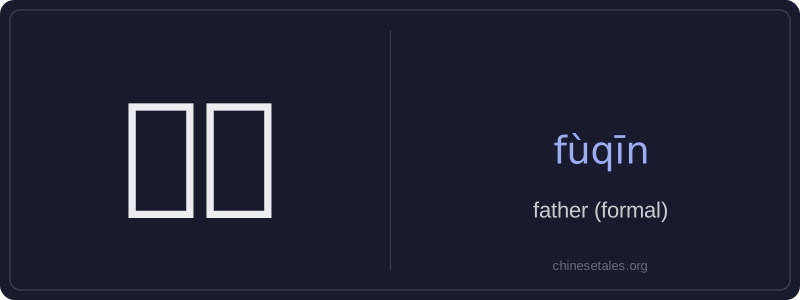
父亲 (fùqīn) is the standard, formal term for 'father' in Mandarin Chinese. It combines two characters: 父 (fù), meaning 'father' or 'male parent', and 亲 (qīn), meaning 'relative' or 'kin'. Together, they form a respectful, neutral compound noun used in writing, official contexts, and polite speech — especially when referring to someone else's father or speaking formally about one's own. Unlike colloquial terms like 爸爸 (bàba), 父亲 carries no diminutive or affectionate connotation; it emphasizes familial role and social propriety.
This word appears frequently in formal documents, biographies, legal forms, and academic discussions of family structure. It is also common in literature and news reports to maintain objectivity and distance. While grammatically interchangeable with 爸爸 in many sentences, 父亲 signals formality and often implies emotional restraint or cultural respect — not coldness, but appropriateness for context.
Example Sentences
Related Words
国语
‘Guó yǔ’ literally means 'national language'—
面条
‘面条’ (miàn tiáo) literally means ‘flour str
无论谁
‘无论谁’ (wú lùn shéi) is a pronoun meaning
背后
背后 literally means 'back + behind' and functions
外语
‘外语’ literally means ‘outside language’ —
认同
‘认同’ (tóng rèn) is a verb meaning ‘to ident
中学
'Zhōngxué' literally combines 'zhōng' (middle)
见面
见面 literally means 'see face' — combining 见 (t