Word Explanation
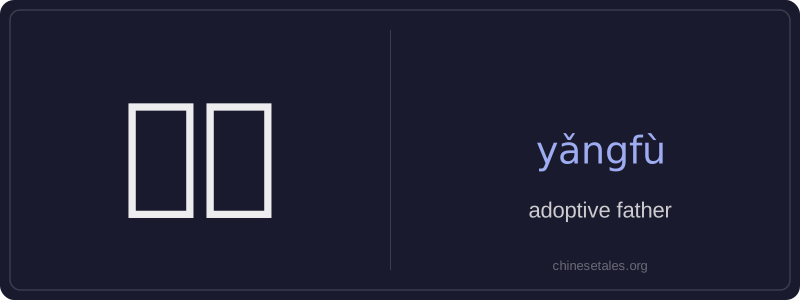
‘Yǎngfù’ literally combines 养 (yǎng), meaning 'to raise' or 'to nurture', and 父 (fù), meaning 'father'. Together, they denote a man who has legally adopted and raised a child as his own, even though he is not the child’s biological father. Unlike terms such as ‘stepfather’ (继父), which refers to a mother’s husband who is not biologically related to the child, ‘yǎngfù’ emphasizes formal adoption and legal parental responsibility.
This term is used in both formal and informal contexts—such as legal documents, family conversations, or news reports—and carries emotional weight similar to ‘father’. It reflects Chinese cultural values around filial piety and lifelong familial bonds formed through care and commitment, not just blood ties. Children typically address their yǎngfù as ‘bàba’ (dad) in daily speech, and the relationship is legally equivalent to that of a biological parent and child under China’s Adoption Law.
Example Sentences
Related Words
国语
‘Guó yǔ’ literally means 'national language'—
面条
‘面条’ (miàn tiáo) literally means ‘flour str
无论谁
‘无论谁’ (wú lùn shéi) is a pronoun meaning
背后
背后 literally means 'back + behind' and functions
外语
‘外语’ literally means ‘outside language’ —
认同
‘认同’ (tóng rèn) is a verb meaning ‘to ident
中学
'Zhōngxué' literally combines 'zhōng' (middle)
见面
见面 literally means 'see face' — combining 见 (t