Word Explanation
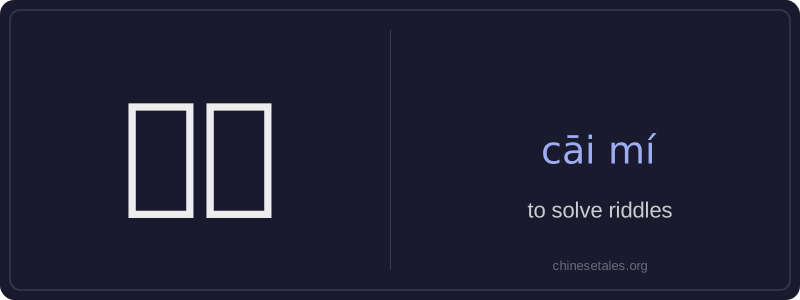
‘猜谜’ literally means ‘to guess riddles’ — combining 猜 (cāi), meaning ‘to guess’ or ‘to figure out’, and 谜 (mí), meaning ‘riddle’ or ‘puzzle’. It refers to the activity of solving wordplay-based, logical, or culturally embedded riddles, often enjoyed during festivals like Spring Festival or Lantern Festival, where riddles are posted on lanterns for people to solve. The word emphasizes active thinking, deduction, and linguistic creativity.
This verb is commonly used in both spoken and written Chinese, especially in educational, festive, or recreational contexts. It’s often followed by an object (e.g., 猜谜语, 猜灯谜) or used intransitively (e.g., 我们一起猜谜). While 猜 alone can mean ‘to guess’ broadly, adding 谜 specifies the activity is about riddles — not general speculation or fortune-telling. It carries a light, playful connotation and is rarely used in formal or technical writing.
Example Sentences
Related Words
国语
‘Guó yǔ’ literally means 'national language'—
面条
‘面条’ (miàn tiáo) literally means ‘flour str
无论谁
‘无论谁’ (wú lùn shéi) is a pronoun meaning
背后
背后 literally means 'back + behind' and functions
外语
‘外语’ literally means ‘outside language’ —
认同
‘认同’ (tóng rèn) is a verb meaning ‘to ident
中学
'Zhōngxué' literally combines 'zhōng' (middle)
见面
见面 literally means 'see face' — combining 见 (t