Word Explanation
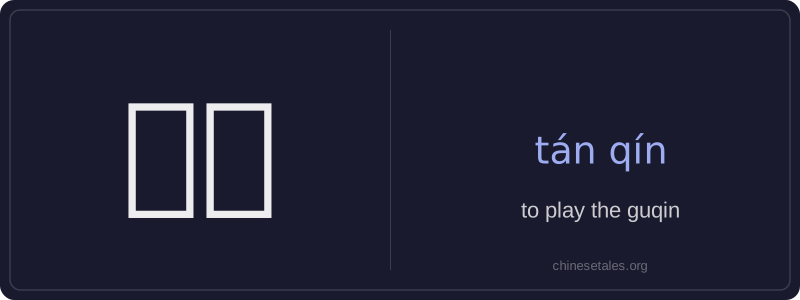
弹琴 (tán qín) literally means 'to pluck the zither' and specifically refers to playing the guqin — a traditional seven-stringed Chinese zither with over 3,000 years of history. The character 弹 (tán) means 'to pluck or strum' and is commonly used for stringed instruments, while 琴 (qín) is a generic term for zither-like instruments, but in this fixed compound it almost always denotes the guqin. Unlike broader terms like 演奏 (yǎn zòu, 'to perform'), 弹琴 carries classical, scholarly connotations and evokes quiet refinement, meditation, and literati culture.
This verb is typically used in formal, artistic, or historical contexts — not for modern Western instruments. It appears frequently in classical poetry, biographies of scholars, and descriptions of traditional leisure activities. While technically possible to use 弹琴 for other zithers (e.g., guzheng), doing so is uncommon and potentially misleading; native speakers usually specify the instrument explicitly if not referring to the guqin.
Example Sentences
Related Words
国语
‘Guó yǔ’ literally means 'national language'—
面条
‘面条’ (miàn tiáo) literally means ‘flour str
无论谁
‘无论谁’ (wú lùn shéi) is a pronoun meaning
背后
背后 literally means 'back + behind' and functions
外语
‘外语’ literally means ‘outside language’ —
认同
‘认同’ (tóng rèn) is a verb meaning ‘to ident
中学
'Zhōngxué' literally combines 'zhōng' (middle)
见面
见面 literally means 'see face' — combining 见 (t