Word Explanation
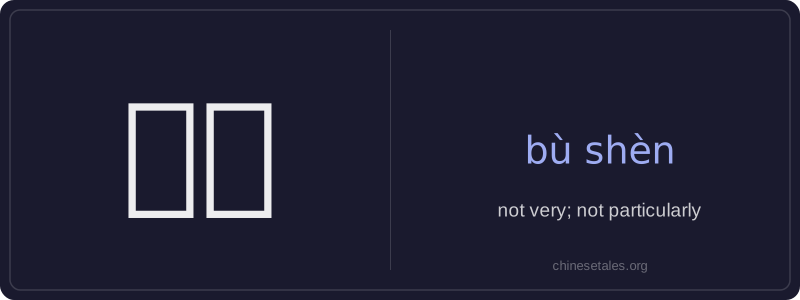
不甚 is an adverb meaning 'not very' or 'not particularly', used to soften or downplay the degree of an adjective or verb. It consists of 不 (bù, 'not') and 甚 (shèn, 'very; extremely'), so literally 'not extremely'. Though classical in origin, it remains common in modern formal and literary Chinese — especially in writing, speeches, or polite conversation — where it conveys restraint and modesty.
This phrase typically precedes adjectives (e.g., 不甚清楚, 不甚满意) or verbs (e.g., 不甚了解), but never nouns. It carries a slightly refined, understated tone — more formal than 没那么 or 有点儿, and less emphatic than 完全不 or 根本不. Learners should note that 不甚 is rarely used in casual spoken Mandarin among young people; it’s more frequent in news reports, official documents, or thoughtful personal expression.
Example Sentences
Related Words
国语
‘Guó yǔ’ literally means 'national language'—
面条
‘面条’ (miàn tiáo) literally means ‘flour str
无论谁
‘无论谁’ (wú lùn shéi) is a pronoun meaning
背后
背后 literally means 'back + behind' and functions
外语
‘外语’ literally means ‘outside language’ —
认同
‘认同’ (tóng rèn) is a verb meaning ‘to ident
中学
'Zhōngxué' literally combines 'zhōng' (middle)
见面
见面 literally means 'see face' — combining 见 (t