Word Explanation
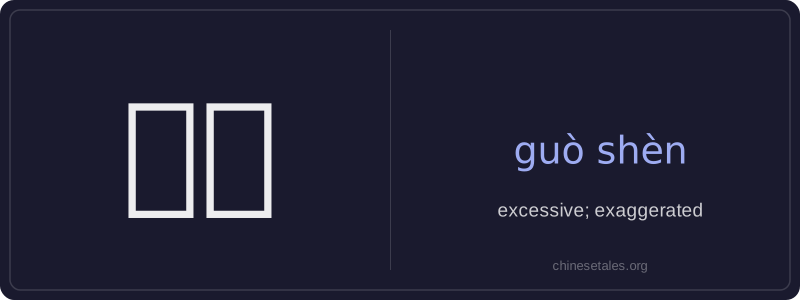
過甚 (guò shèn) is an adjective meaning 'excessive' or 'exaggerated', often describing something that goes beyond reasonable or appropriate limits. The character 過 (guò) means 'to pass' or 'beyond', while 甚 (shèn) means 'extremely' or 'very'; together, they literally convey 'going too far' or 'excessively extreme'. It’s commonly used in formal or written Chinese — especially in critiques, analyses, or cautionary statements — to highlight imbalance, overreaction, or unwarranted intensity.
This term rarely appears in casual speech and is more frequent in essays, news reports, or academic discussions. It typically modifies abstract nouns like 擔憂 (concern), 批評 (criticism), or 宣傳 (promotion), and often carries a mildly negative or corrective tone. While it can describe physical excess (e.g., overuse of resources), its most natural usage relates to emotional, rhetorical, or behavioral overreach — such as undue anxiety, hyperbolic language, or disproportionate responses.
Example Sentences
Related Words
国语
‘Guó yǔ’ literally means 'national language'—
面条
‘面条’ (miàn tiáo) literally means ‘flour str
无论谁
‘无论谁’ (wú lùn shéi) is a pronoun meaning
背后
背后 literally means 'back + behind' and functions
外语
‘外语’ literally means ‘outside language’ —
认同
‘认同’ (tóng rèn) is a verb meaning ‘to ident
中学
'Zhōngxué' literally combines 'zhōng' (middle)
见面
见面 literally means 'see face' — combining 见 (t