Word Explanation
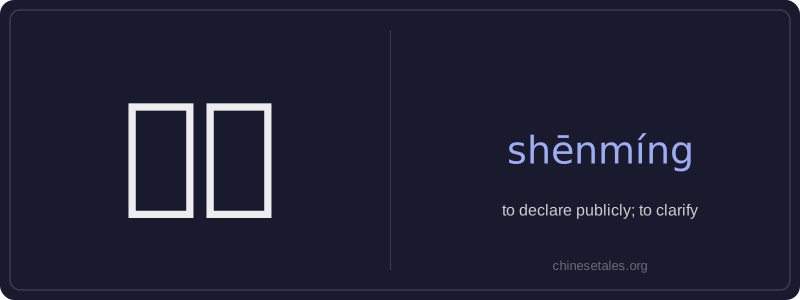
申明 (shēnmíng) is a formal verb meaning 'to declare publicly' or 'to clarify officially', often used when correcting misinformation, stating a position, or affirming facts in writing or speech. The first character 申 (shēn) originally meant 'to stretch out' or 'to state clearly', and over time developed connotations of 'presenting an argument' or 'making a formal statement'. The second character 明 (míng) means 'clear' or 'bright', reinforcing the idea of making something unambiguous or transparent. Together, they convey the sense of bringing clarity through an authoritative or public declaration.
This word is commonly found in official notices, news reports, legal documents, and corporate communications — contexts where precision and accountability matter. It’s more formal than verbs like 说明 (shuōmíng, 'to explain') or 表明 (biǎomíng, 'to indicate'), and usually implies intentionality and seriousness. Learners should note that 申明 is almost always transitive and typically followed by a clause or noun phrase indicating what is being declared or clarified.
Example Sentences
Related Words
国语
‘Guó yǔ’ literally means 'national language'—
面条
‘面条’ (miàn tiáo) literally means ‘flour str
无论谁
‘无论谁’ (wú lùn shéi) is a pronoun meaning
背后
背后 literally means 'back + behind' and functions
外语
‘外语’ literally means ‘outside language’ —
认同
‘认同’ (tóng rèn) is a verb meaning ‘to ident
中学
'Zhōngxué' literally combines 'zhōng' (middle)
见面
见面 literally means 'see face' — combining 见 (t