Word Explanation
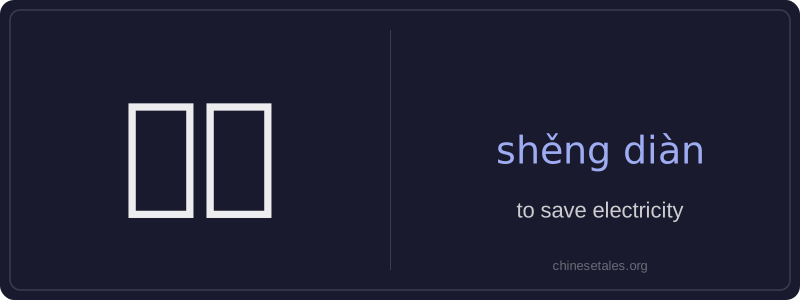
省电 means 'to save electricity' — a common compound verb in modern Chinese. It combines 省 (shěng), meaning 'to save' or 'to conserve', and 电 (diàn), meaning 'electricity'. Together, they express the intentional act of reducing electrical power consumption, often for economic, environmental, or practical reasons. This term is frequently used in everyday contexts like household energy management, appliance instructions, and public awareness campaigns.
The word functions as a transitive verb and commonly appears with modal verbs (e.g., 可以省电, 应该省电), aspect markers (e.g., 正在省电, 已经省电), or as a complement (e.g., 让灯更省电). It’s neutral in register — appropriate in both spoken and written language — and widely understood across age groups. While it literally refers to electricity, it’s rarely used metaphorically; its meaning stays concrete and functional.
Example Sentences
Related Words
国语
‘Guó yǔ’ literally means 'national language'—
面条
‘面条’ (miàn tiáo) literally means ‘flour str
无论谁
‘无论谁’ (wú lùn shéi) is a pronoun meaning
背后
背后 literally means 'back + behind' and functions
外语
‘外语’ literally means ‘outside language’ —
认同
‘认同’ (tóng rèn) is a verb meaning ‘to ident
中学
'Zhōngxué' literally combines 'zhōng' (middle)
见面
见面 literally means 'see face' — combining 见 (t