Word Explanation
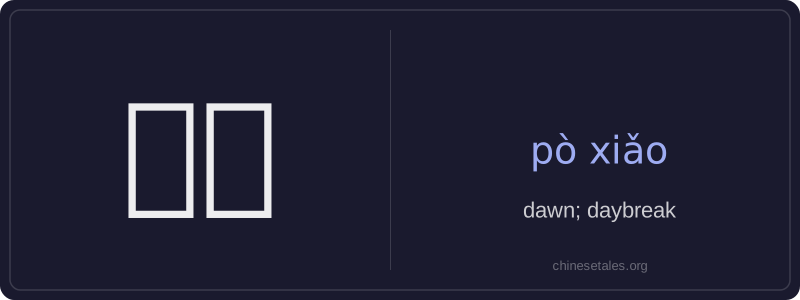
‘破晓’ literally means ‘to break through dawn’—‘破’ (pò) conveys the idea of breaking or piercing, while ‘晓’ (xiǎo) means ‘dawn’ or ‘daybreak’. Together, they evoke the precise moment when darkness yields to the first light of day, emphasizing transition and emergence. It is a poetic, slightly literary term—not used in casual speech—but common in writing, poetry, news headlines, and formal descriptions of time.
The word carries a gentle, hopeful tone, often suggesting renewal, revelation, or the start of something significant. It’s frequently paired with verbs like ‘来临’ (to arrive), ‘时分’ (moment), or ‘前’ (before), and appears in phrases such as ‘破晓时分’ (at the break of dawn). Unlike the more neutral ‘早晨’ (morning) or ‘清晨’ (early morning), ‘破晓’ specifically refers to the earliest visible light before sunrise—not the full daylight hours.
Example Sentences
Related Words
国语
‘Guó yǔ’ literally means 'national language'—
面条
‘面条’ (miàn tiáo) literally means ‘flour str
无论谁
‘无论谁’ (wú lùn shéi) is a pronoun meaning
背后
背后 literally means 'back + behind' and functions
外语
‘外语’ literally means ‘outside language’ —
认同
‘认同’ (tóng rèn) is a verb meaning ‘to ident
中学
'Zhōngxué' literally combines 'zhōng' (middle)
见面
见面 literally means 'see face' — combining 见 (t