Word Explanation
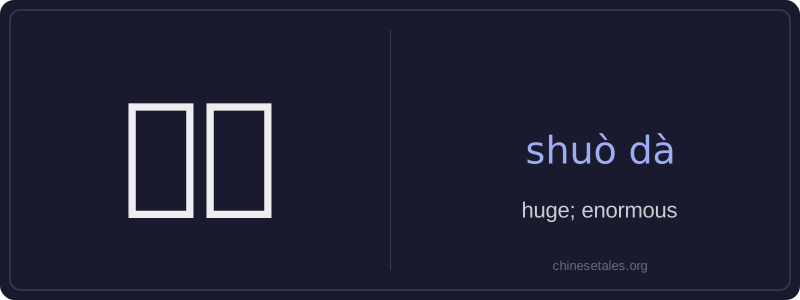
硕大 is an adjective meaning 'huge' or 'enormous', emphasizing exceptional size—often with a sense of impressiveness or imposing presence. The character 硕 (shuò) originally meant 'large' or 'grand', especially in classical contexts (e.g., 硕士 'master’s degree'), while 大 (dà) simply means 'big'. Together, they form a compound that intensifies the idea of bigness beyond ordinary scale—more emphatic and literary than just 大 alone.
This word is commonly used to describe large animals, fruits, objects, or natural features where size evokes awe or dominance. It appears frequently in descriptive writing, nature documentaries, and formal speech—but rarely in casual daily conversation. It carries a slightly elevated, vivid tone and often implies visual impact: think of a bear’s head, a watermelon at harvest, or a towering mushroom in the forest. While grammatically it functions like other adjectives (modifying nouns directly), it is typically placed before the noun without particles like 的, especially in written or literary usage.
Example Sentences
Related Words
国语
‘Guó yǔ’ literally means 'national language'—
面条
‘面条’ (miàn tiáo) literally means ‘flour str
无论谁
‘无论谁’ (wú lùn shéi) is a pronoun meaning
背后
背后 literally means 'back + behind' and functions
外语
‘外语’ literally means ‘outside language’ —
认同
‘认同’ (tóng rèn) is a verb meaning ‘to ident
中学
'Zhōngxué' literally combines 'zhōng' (middle)
见面
见面 literally means 'see face' — combining 见 (t