Word Explanation
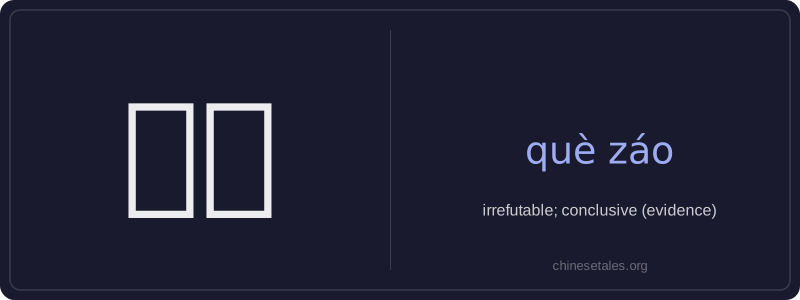
确凿 (què záo) is an adjective meaning 'irrefutable' or 'conclusive', most commonly used to describe evidence, facts, or proof that leaves no room for doubt. The first character 确 means 'certain' or 'definite', while 凿 originally refers to 'chiseling' — a physical act implying precision and indelibility. Together, they evoke the image of something carved so firmly into reality that it cannot be denied or erased. This word carries a formal, serious tone and appears frequently in legal, scientific, journalistic, and academic contexts.
It typically modifies nouns like 证据 (evidence), 事实 (fact), or 证明 (proof), and often appears after demonstratives (e.g., 这一确凿的证据) or in predicate position (e.g., 证据确凿). It rarely stands alone and almost never functions as a verb or noun. While similar in meaning to words like 确实 or 真实, 确凿 emphasizes objective, externally verifiable certainty rather than subjective belief or general truth.
Example Sentences
Related Words
国语
‘Guó yǔ’ literally means 'national language'—
面条
‘面条’ (miàn tiáo) literally means ‘flour str
无论谁
‘无论谁’ (wú lùn shéi) is a pronoun meaning
背后
背后 literally means 'back + behind' and functions
外语
‘外语’ literally means ‘outside language’ —
认同
‘认同’ (tóng rèn) is a verb meaning ‘to ident
中学
'Zhōngxué' literally combines 'zhōng' (middle)
见面
见面 literally means 'see face' — combining 见 (t