Word Explanation
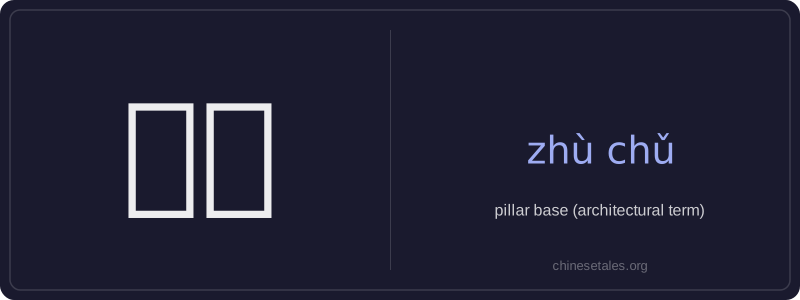
柱础 (zhù chǔ) literally means 'pillar foundation' or 'pillar base' — a key architectural element in traditional Chinese buildings. The character 柱 (zhù) means 'pillar' or 'column', while 础 (chǔ) refers to the stone base or plinth that supports the pillar, typically carved and placed directly on the foundation platform. Historically, column bases were not only functional (distributing weight and protecting wooden pillars from moisture and insects) but also highly decorative, often featuring intricate carvings of auspicious motifs like dragons, clouds, or lotus petals.
This term is used almost exclusively in discussions of classical Chinese architecture, historical preservation, archaeology, and art history. You’ll encounter it in museum labels, academic texts, restoration reports, and guided tours of ancient temples, palaces, or courtyards. It is a formal, technical term — rarely used in everyday speech — and carries strong cultural connotations of craftsmanship, longevity, and structural harmony.
Example Sentences
Related Words
国语
‘Guó yǔ’ literally means 'national language'—
面条
‘面条’ (miàn tiáo) literally means ‘flour str
无论谁
‘无论谁’ (wú lùn shéi) is a pronoun meaning
背后
背后 literally means 'back + behind' and functions
外语
‘外语’ literally means ‘outside language’ —
认同
‘认同’ (tóng rèn) is a verb meaning ‘to ident
中学
'Zhōngxué' literally combines 'zhōng' (middle)
见面
见面 literally means 'see face' — combining 见 (t