Word Explanation
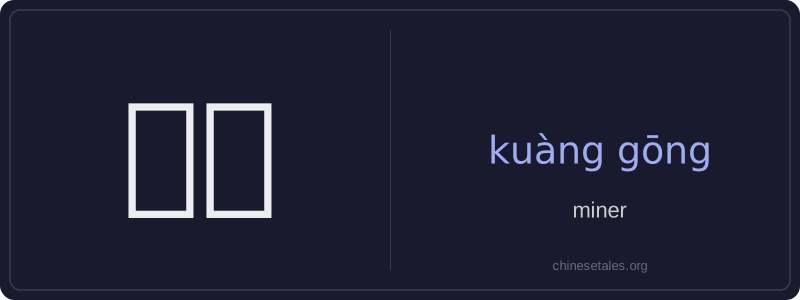
矿工 (kuàng gōng) literally means 'mine worker' — 矿 (kuàng) refers to a mine or mineral deposit, and 工 (gōng) means 'worker' or 'laborer'. Together, they form a compound noun meaning 'miner', a person who extracts coal, metals, or other minerals from underground or open-pit mines. This term is neutral in register and commonly used in news reports, occupational contexts, and safety discussions.
The word emphasizes the labor-intensive, often hazardous nature of the work; it carries connotations of physical strength, endurance, and risk. While historically associated with coal mining in China, it now applies broadly to workers in any mineral extraction industry — including iron, copper, or rare-earth mining. It is not used for surface-level construction workers or factory staff; those are 建筑工人 (jiànzhù gōngrén) or 工厂工人 (gōngchǎng gōngrén), respectively.
Example Sentences
Related Words
国语
‘Guó yǔ’ literally means 'national language'—
面条
‘面条’ (miàn tiáo) literally means ‘flour str
无论谁
‘无论谁’ (wú lùn shéi) is a pronoun meaning
背后
背后 literally means 'back + behind' and functions
外语
‘外语’ literally means ‘outside language’ —
认同
‘认同’ (tóng rèn) is a verb meaning ‘to ident
中学
'Zhōngxué' literally combines 'zhōng' (middle)
见面
见面 literally means 'see face' — combining 见 (t