Word Explanation
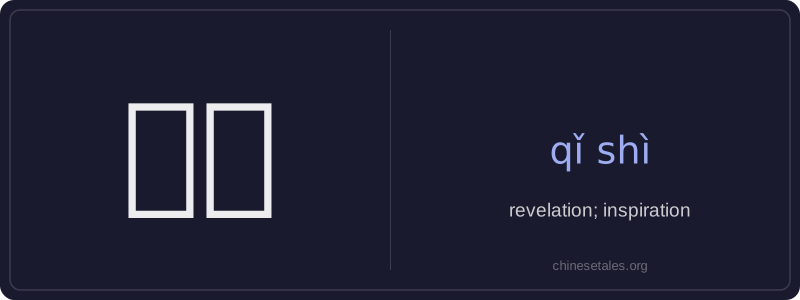
‘启示’ (qǐ shì) is a noun meaning ‘revelation’ or ‘inspiration’ — something that suddenly clarifies a truth, deepens understanding, or sparks meaningful insight. The character 启 (qǐ) means ‘to open’, ‘to initiate’, or ‘to enlighten’, while 示 (shì) means ‘to show’, ‘to indicate’, or ‘to demonstrate’. Together, they convey the idea of an idea or truth being ‘opened up and shown’ — often unexpectedly — leading to intellectual or emotional awakening. It carries a formal, reflective tone and is common in academic, literary, philosophical, or spiritual contexts.
This word emphasizes depth and significance: it’s not just any idea, but one that changes perspective or prompts profound realization. Unlike casual words like ‘idea’ or ‘thought’, 启示 suggests gravity and lasting impact — for example, a life experience that reshapes values, or a scientific discovery that transforms a field. It’s frequently used in written Chinese and formal speech, rarely in casual conversation.
Example Sentences
Related Words
国语
‘Guó yǔ’ literally means 'national language'—
面条
‘面条’ (miàn tiáo) literally means ‘flour str
无论谁
‘无论谁’ (wú lùn shéi) is a pronoun meaning
背后
背后 literally means 'back + behind' and functions
外语
‘外语’ literally means ‘outside language’ —
认同
‘认同’ (tóng rèn) is a verb meaning ‘to ident
中学
'Zhōngxué' literally combines 'zhōng' (middle)
见面
见面 literally means 'see face' — combining 见 (t