Word Explanation
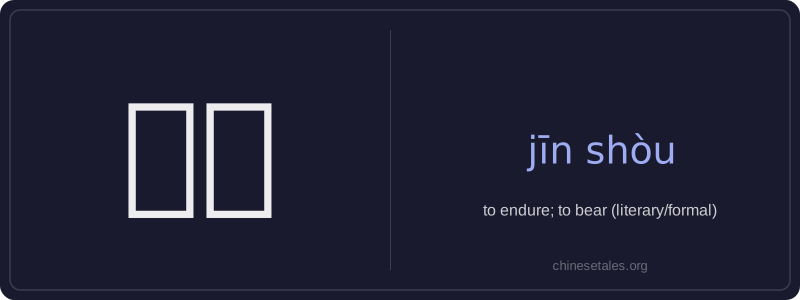
禁受 (jīn shòu) is a formal or literary verb meaning 'to endure' or 'to bear' — especially hardship, pain, pressure, or emotional strain. Though composed of two characters, 禁 and 受, it functions as a single inseparable compound verb; neither character carries this precise meaning alone in modern usage. The first character 禁 here is read jīn (not jìn), indicating 'to withstand', while 受 means 'to receive' or 'to undergo'. Together, they evoke the sense of receiving something difficult without collapsing under it — implying resilience, fortitude, and often quiet suffering.
This word appears frequently in written Chinese — literature, essays, news reports, and formal speeches — but rarely in casual speech, where people prefer simpler alternatives like 忍 (rěn) or 承受 (chéng shòu). It often collocates with abstract nouns: 压力 (yālì, pressure), 打击 (dǎjī, blow), 痛苦 (tòngkǔ, pain), or 考验 (kǎoyàn, test). Its tone is solemn and slightly archaic, lending gravity to descriptions of human endurance.
Example Sentences
Related Words
国语
‘Guó yǔ’ literally means 'national language'—
面条
‘面条’ (miàn tiáo) literally means ‘flour str
无论谁
‘无论谁’ (wú lùn shéi) is a pronoun meaning
背后
背后 literally means 'back + behind' and functions
外语
‘外语’ literally means ‘outside language’ —
认同
‘认同’ (tóng rèn) is a verb meaning ‘to ident
中学
'Zhōngxué' literally combines 'zhōng' (middle)
见面
见面 literally means 'see face' — combining 见 (t