Word Explanation
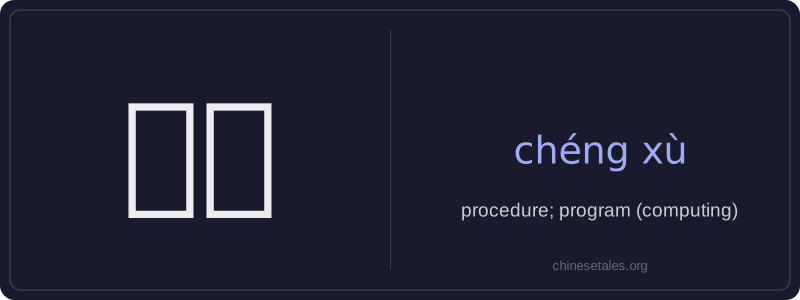
程序 (chéng xù) literally combines 程 (chéng), meaning 'course', 'stage', or 'standard procedure', and 序 (xù), meaning 'order', 'sequence', or 'arrangement'. Together, they denote a fixed, logical sequence of steps or actions designed to achieve a specific outcome. In everyday contexts, it refers to formal procedures — such as government approval processes, classroom routines, or manufacturing workflows. The emphasis is on systematic, rule-governed order.
In computing, 程序 is the standard term for 'program' — a set of coded instructions that tell a computer how to perform tasks. This usage reflects the same core idea: a precise, ordered series of operations. While both meanings share the notion of sequence and structure, the computing sense is highly technical and dominant in tech-related discourse. Learners should note that 程序 is never used for informal or spontaneous actions — it always implies intentionality, design, and repeatability.
Example Sentences
Related Words
国语
‘Guó yǔ’ literally means 'national language'—
面条
‘面条’ (miàn tiáo) literally means ‘flour str
无论谁
‘无论谁’ (wú lùn shéi) is a pronoun meaning
背后
背后 literally means 'back + behind' and functions
外语
‘外语’ literally means ‘outside language’ —
认同
‘认同’ (tóng rèn) is a verb meaning ‘to ident
中学
'Zhōngxué' literally combines 'zhōng' (middle)
见面
见面 literally means 'see face' — combining 见 (t