Word Explanation
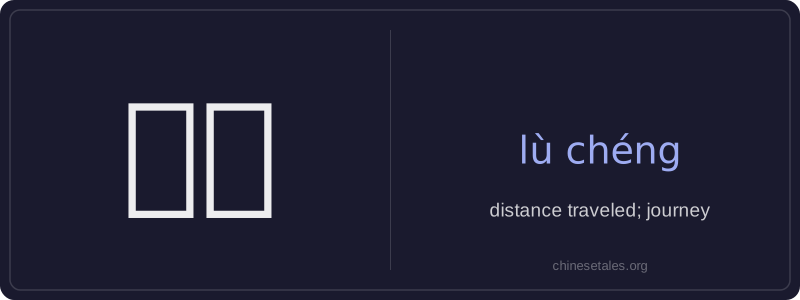
路程 (lù chéng) literally combines 路 (lù), meaning 'road' or 'path', and 程 (chéng), meaning 'distance', 'course', or 'journey'. Together, it refers to the physical distance traveled between two points — not just the route, but specifically how far one goes. It emphasizes measurable length (e.g., in kilometers or miles) rather than time or effort.
This word is commonly used when planning travel, discussing commute length, calculating transportation costs, or describing trips by car, train, or foot. Unlike 道路 (dào lù, 'road') or 旅途 (lǚ tú, 'journey' with emphasis on experience), 路程 focuses objectively on spatial distance. It often appears with measure words like '段' (duàn, 'section') or numbers + '公里' (gōng lǐ, 'kilometers'), and is neutral in register — appropriate in both spoken and written contexts, from casual conversation to official transport documents.
Example Sentences
Related Words
国语
‘Guó yǔ’ literally means 'national language'—
面条
‘面条’ (miàn tiáo) literally means ‘flour str
认同
‘认同’ (tóng rèn) is a verb meaning ‘to ident
无论谁
‘无论谁’ (wú lùn shéi) is a pronoun meaning
背后
背后 literally means 'back + behind' and functions
外语
‘外语’ literally means ‘outside language’ —
中学
'Zhōngxué' literally combines 'zhōng' (middle)
见面
见面 literally means 'see face' — combining 见 (t