Word Explanation
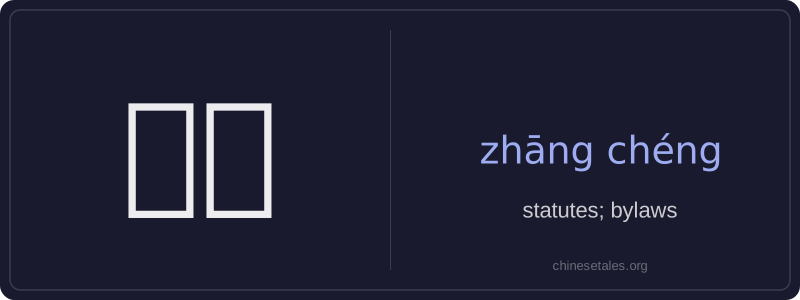
章程 (zhāng chéng) refers to formal, written rules that govern the internal operations of an organization—such as a company, association, school, or club. Literally, 章 means 'chapter' or 'article', and 程 means 'procedure' or 'standard'; together, they convey the idea of codified, systematic regulations. These documents typically outline membership requirements, decision-making processes, leadership structure, and operational principles.
Unlike general laws (法律), which are enacted by governments, 章程 are self-drafted and binding only within the specific organization. They must comply with national law but reflect the group’s unique purpose and values. You’ll commonly encounter 章程 when registering a nonprofit, joining a professional society, or reviewing corporate governance documents in China. It’s a formal, legal-adjacent term—not used in casual speech—and appears frequently in official notices, registration forms, and organizational websites.
Example Sentences
Related Words
国语
‘Guó yǔ’ literally means 'national language'—
面条
‘面条’ (miàn tiáo) literally means ‘flour str
认同
‘认同’ (tóng rèn) is a verb meaning ‘to ident
无论谁
‘无论谁’ (wú lùn shéi) is a pronoun meaning
背后
背后 literally means 'back + behind' and functions
外语
‘外语’ literally means ‘outside language’ —
中学
'Zhōngxué' literally combines 'zhōng' (middle)
见面
见面 literally means 'see face' — combining 见 (t