Word Explanation
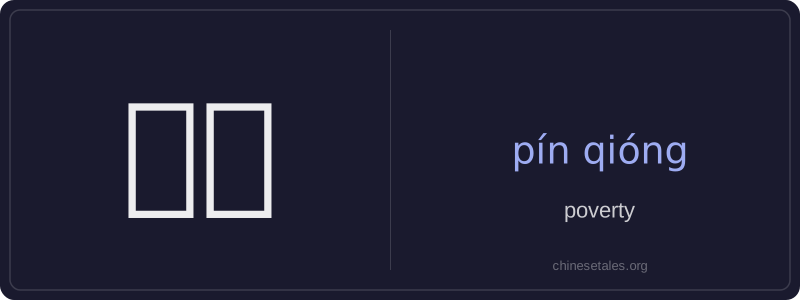
贫穷 (pín qióng) is a compound noun meaning 'poverty' — the state of lacking sufficient material resources, especially money and basic necessities like food, shelter, or healthcare. Both characters individually carry related meanings: 贫 means 'poor' or 'impoverished', often emphasizing scarcity of wealth; 穷 also means 'poor' or 'destitute', but can additionally imply exhaustion of options or extreme hardship. Together, they reinforce each other to form a formal, literary, and slightly solemn term for systemic or severe poverty — commonly used in news reports, policy discussions, and academic writing, rather than casual speech.
The word frequently appears in collocations such as 贫穷地区 (pínqióng dìqū, 'impoverished areas'), 摆脱贫穷 (bǎituō pínqióng, 'to escape poverty'), or 贫穷线 (pínqióng xiàn, 'poverty line'). While it can describe individuals, it’s more often applied to communities, regions, or socioeconomic conditions. It carries a neutral-to-somber connotation and avoids judgmental overtones — unlike some colloquial terms — making it appropriate for respectful, objective discourse about economic disadvantage.
Example Sentences
Related Words
国语
‘Guó yǔ’ literally means 'national language'—
面条
‘面条’ (miàn tiáo) literally means ‘flour str
外语
‘外语’ literally means ‘outside language’ —
认同
‘认同’ (tóng rèn) is a verb meaning ‘to ident
无论谁
‘无论谁’ (wú lùn shéi) is a pronoun meaning
背后
背后 literally means 'back + behind' and functions
认为
‘认为’ (rèn wéi) is a transitive verb meaning
不对
不对 (bù duì) literally combines 不 (bù), meani