Word Explanation
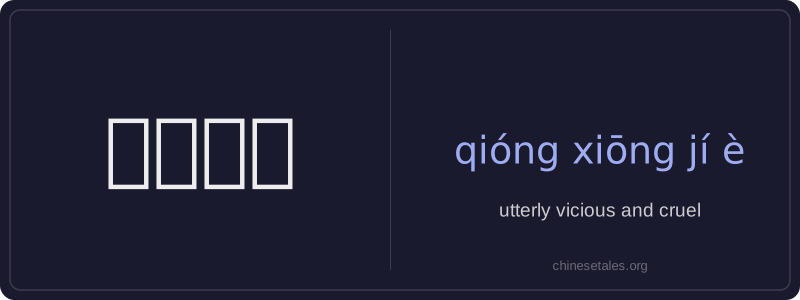
‘穷凶极恶’ is a four-character idiom (chengyu) meaning 'utterly vicious and cruel' — describing someone or something exhibiting the utmost degree of brutality, malice, and moral depravity. Each character contributes intensively: 穷 (qióng) means 'exhaustive' or 'to the utmost'; 凶 (xiōng) means 'fierce', 'ferocious', or 'sinister'; 极 (jí) means 'extreme' or 'peak'; and 恶 (è) means 'evil' or 'wickedness'. Together, they form a compound intensifier — not just 'very bad', but 'as bad as humanly possible'.
This chengyu is highly formal and literary, often used in news reports, historical narratives, or moral condemnations — especially to describe criminals, tyrants, or monstrous acts. It carries strong negative judgment and emotional weight, rarely used lightly or humorously. While it can modify nouns (e.g., 穷凶极恶的罪犯), it most commonly appears as a predicative or attributive adjective before a noun, and is almost always reserved for serious, morally charged contexts.
Example Sentences
Related Words
国语
‘Guó yǔ’ literally means 'national language'—
面条
‘面条’ (miàn tiáo) literally means ‘flour str
外语
‘外语’ literally means ‘outside language’ —
认同
‘认同’ (tóng rèn) is a verb meaning ‘to ident
无论谁
‘无论谁’ (wú lùn shéi) is a pronoun meaning
背后
背后 literally means 'back + behind' and functions
认为
‘认为’ (rèn wéi) is a transitive verb meaning
不对
不对 (bù duì) literally combines 不 (bù), meani