Word Explanation
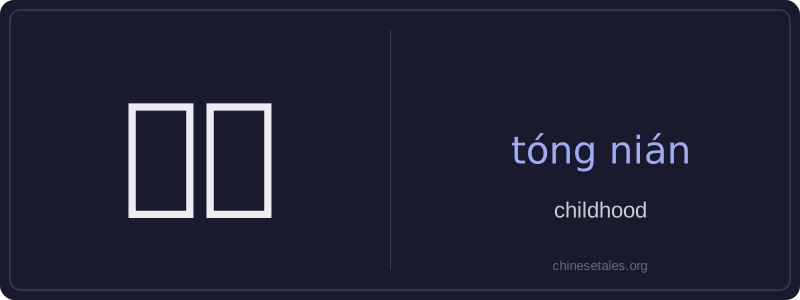
童年 (tóng nián) literally means 'child years' — 童 (tóng) means 'child' or 'youth', and 年 (nián) means 'year' or 'years'. Together, they form a compound noun referring specifically to the period of life from early childhood through pre-adolescence — roughly ages 0 to 12. Unlike the more general term 儿时 (ér shí), which also means 'childhood', 童年 carries a stronger emotional connotation, often evoking nostalgia, innocence, simplicity, and formative experiences.
This word is commonly used in reflective, literary, or psychological contexts — for example, when discussing memories, trauma, upbringing, or personal development. It appears frequently in memoirs, education discussions, and mental health discourse. While it’s a neutral, standard-term noun, it rarely appears in formal bureaucratic or technical writing unless referencing developmental stages. It’s typically unmodified by measure words; you say 我的童年 (wǒ de tóng nián), not *一个童年, though rare poetic uses may occur.
Example Sentences
Related Words
国语
‘Guó yǔ’ literally means 'national language'—
面条
‘面条’ (miàn tiáo) literally means ‘flour str
无论谁
‘无论谁’ (wú lùn shéi) is a pronoun meaning
外语
‘外语’ literally means ‘outside language’ —
认同
‘认同’ (tóng rèn) is a verb meaning ‘to ident
背后
背后 literally means 'back + behind' and functions
认为
‘认为’ (rèn wéi) is a transitive verb meaning
不对
不对 (bù duì) literally combines 不 (bù), meani