Word Explanation
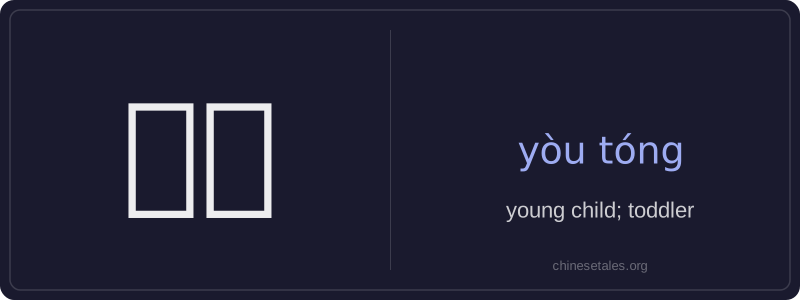
幼童 literally combines 幼 (yòu), meaning 'young', 'immature', or 'tender', and 童 (tóng), meaning 'child' or 'youth'. Together, they refer specifically to a very young child—typically under age six—often emphasizing vulnerability, innocence, or developmental stage. It’s more formal and literary than everyday terms like 小孩 or 孩子, and commonly appears in official documents, education policy, childcare contexts, or news reports about child welfare.
The term carries a gentle, protective connotation and is rarely used in casual speech among friends or family; instead, it’s preferred in written or institutional settings where precision and respectful tone matter. While 幼童 can overlap with 'toddler', it’s broader—it may include preschoolers too—and never implies clumsiness or behavior typical of toddlers alone. It focuses on age and developmental status rather than physical traits or actions.
Example Sentences
Related Words
国语
‘Guó yǔ’ literally means 'national language'—
面条
‘面条’ (miàn tiáo) literally means ‘flour str
无论谁
‘无论谁’ (wú lùn shéi) is a pronoun meaning
外语
‘外语’ literally means ‘outside language’ —
认同
‘认同’ (tóng rèn) is a verb meaning ‘to ident
背后
背后 literally means 'back + behind' and functions
认为
‘认为’ (rèn wéi) is a transitive verb meaning
不对
不对 (bù duì) literally combines 不 (bù), meani