Word Explanation
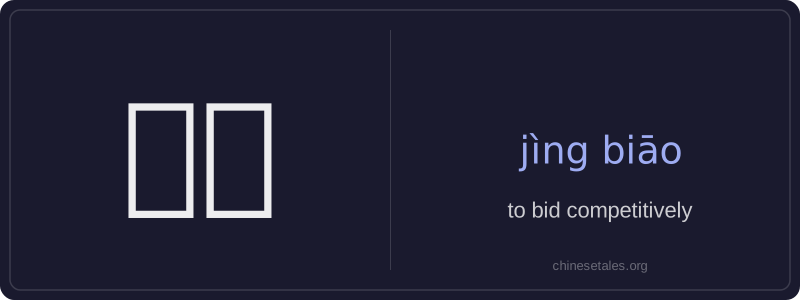
竞标 (jìng biāo) is a verb meaning 'to bid competitively'—typically in formal contexts like government contracts, construction projects, or corporate procurement. The character 竞 (jìng) means 'to compete' or 'to vie', conveying rivalry and effort to outperform others; 标 (biāo) originally means 'target' or 'standard', but here refers to the 'bid' or 'tender' itself—the proposal submitted with price, timeline, and technical specifications. Together, 竞标 emphasizes the competitive nature of submitting bids against other qualified parties.
This term is commonly used in business, public administration, and infrastructure development. It implies a regulated, often transparent process overseen by an issuing authority (e.g., a city bureau or state-owned enterprise). While similar to 招标 (zhāo biāo, 'to invite bids'), 竞标 specifically describes the act of the bidders—not the issuer—and is almost always used transitively or as part of a noun phrase like 竞标过程 (the bidding process) or 竞标成功 (to win the bid).
Example Sentences
Related Words
国语
‘Guó yǔ’ literally means 'national language'—
面条
‘面条’ (miàn tiáo) literally means ‘flour str
无论谁
‘无论谁’ (wú lùn shéi) is a pronoun meaning
外语
‘外语’ literally means ‘outside language’ —
认同
‘认同’ (tóng rèn) is a verb meaning ‘to ident
背后
背后 literally means 'back + behind' and functions
认为
‘认为’ (rèn wéi) is a transitive verb meaning
不对
不对 (bù duì) literally combines 不 (bù), meani